Jerusalem, 21 October, 2026 (TPS-IL) — A Jerusalem Magistrate’s Court on Wednesday ordered most of the suspects in last weekend’s attacks on an American journalist and European diplomats during the olive harvest to be moved to house arrest. Only one detainee had his custody extended. The police and the legal aid group Honenu, which represents some of the detainees, described the outcome in very different terms.
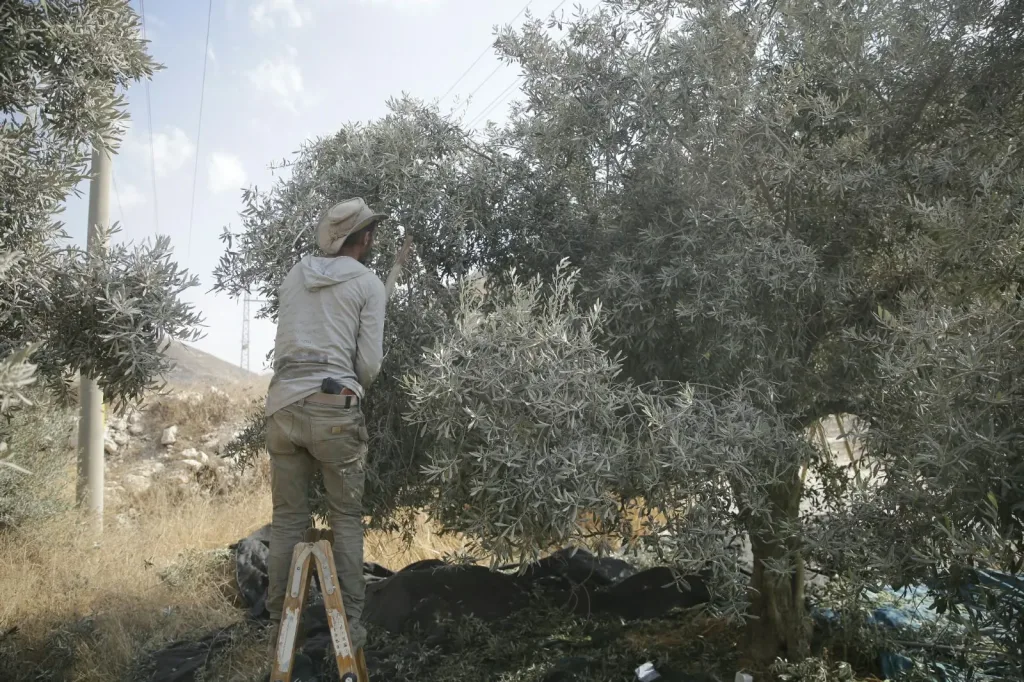
Olive harvesters in an olive grove owned by Jews in the southern Hebron Hills.
Photo: Eitan Shalem/TPS-IL
Reuters reported that masked settlers were filmed on Friday, Oct. 16, assaulting Washington Post photojournalist Heidi Levine, a US citizen covering a Palestinian olive harvest, and that European diplomats and a French mayor were attacked the next day in another part of Judea and Samaria. The United States had urged a crackdown on settler violence, and France, Belgium and Poland, whose diplomats were attacked, also called for action. Foreign Minister Gideon Saar and the military blamed “Israeli rioters” for the diplomats’ attack, while Prime Minister Benjamin Netanyahu was more circumspect, calling the facts of the Levine incident “unclear”.
In a statement, the police’s Judea and Samaria District described a complex investigation proceeding as planned. Five suspects were brought before the court on a request to extend their detention. One was held until Oct. 26, and the other four were freed on restrictive conditions, including house arrest until Oct. 29 “to allow investigative actions to continue.”
Police noted that investigators had acted on exculpatory evidence. One suspect was released on conditions set by an officer after his alibi was verified, and another was freed when his questioning ended. The investigating unit has asked the court to delay one release and intends to appeal it. Police also said an indictment was filed a day earlier against a Samaria resident in his twenties for violating a lawful order and other offenses, and that they will pursue “everyone who takes part” in such violence.
Honenu on Wednesday called the arrests “show arrests” meant to satisfy media pressure and “foreign interests,” and described the affair as a “storm in a teacup.” It highlighted the case of a medic who, it says, was on duty treating the wounded and sent real-time messages documenting his presence. It said he was nonetheless arrested and held, and that police themselves released him that morning, before the hearing.
Honenu’s attorney Asaf Gonen called the detentions “wholesale” and part of a “campaign of slander and persecution.” His colleague Daniel Shimshvili welcomed the court’s refusal to extend detention and urged enforcement agencies to stop “dancing to the tune of orchestrated and hostile campaigns,” saying their resources should go toward “pursuing the enemy.”
According to Honenu, Judge Moriah Charka ruled that the single video shown to the court suggested the assault on the journalist occurred during a larger incident of massive stone-throwing, one the four detainees are not suspected of and which was carried out by Palestinians. In the diplomat case, she reportedly freed one detainee because the suspicion against him was very low, but found that suspicion against the second had strengthened, and extended his detention.
The accounts agree on the outcome: one suspect remains in custody, and the others are at home. They differ on what that means. For police, the releases show an investigation working through evidence, with alibis checked and suspects freed or held accordingly. For Honenu, they show that the arrests were baseless to begin with. The judge’s reported remarks sit between these views. They suggest the court found the evidence on the journalist’s assault thin as to these four men, but found the case against one diplomat-case detainee stronger. They do not suggest the court rejected the investigation as a whole.
The two sides also count differently. Police say five suspects appeared in court. Honenu refers to four detainees in the journalist case and two in the diplomat case, and says two were released before the hearing. Neither account makes clear how these groups overlap. Honenu pairs its account of the legal outcome with political claims about foreign pressure and hostile campaigns, while the police statement is a procedural summary that gives little detail on the evidence against the suspects.
Reuters has noted that prosecutions of Israeli settlers are rare. Police say they intend to appeal one release, and a ruling would show how a higher court views the evidence.