


By Pesach Benson • September 17, 2026
Jerusalem, 17 September, 2026 (TPS-IL) — A 2,000-year-old Jewish ritual bath weighing 25 tons has been lifted intact from the ground in an extraordinary Israeli preservation operation ahead of construction of a new neighborhood.
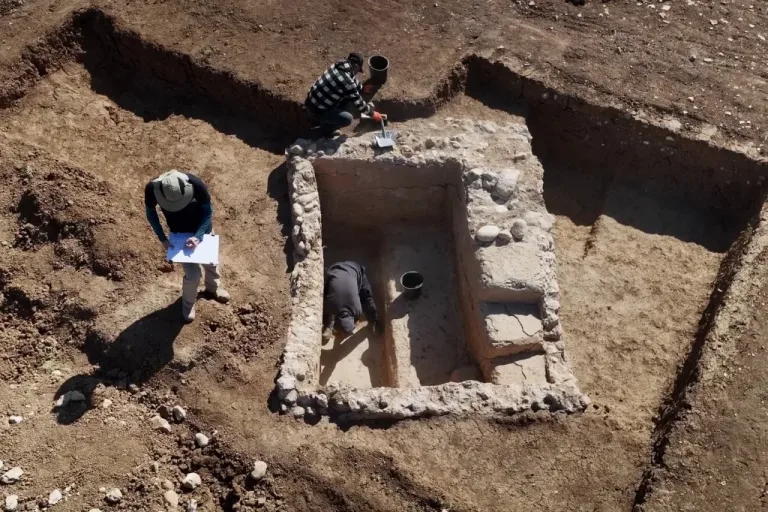
The ancient mikveh, a ritual bath discovered in the southern city of Kiryat Gat and measuring about four meters across, was carefully detached from the earth and hoisted by a 300-ton crane before being transported to the Israel Antiquities Authority’s National Treasures facility at Beit Guvrin. It is expected to return to the site after construction and be incorporated into a public open space at the heart of the new neighborhood.
“The Jewish settlement we discovered here is the first and the only known one in this area,” Israel Antiquities Authority excavation directors Elena Kogan-Zahavi, Maayan Margulis and Shira Lifshitz said. “In the Judean Lowlands, many Jewish settlements from the Roman period are known, but in the seam between the Judean Lowlands and the northern Negev – no Jewish settlement was known until now.”
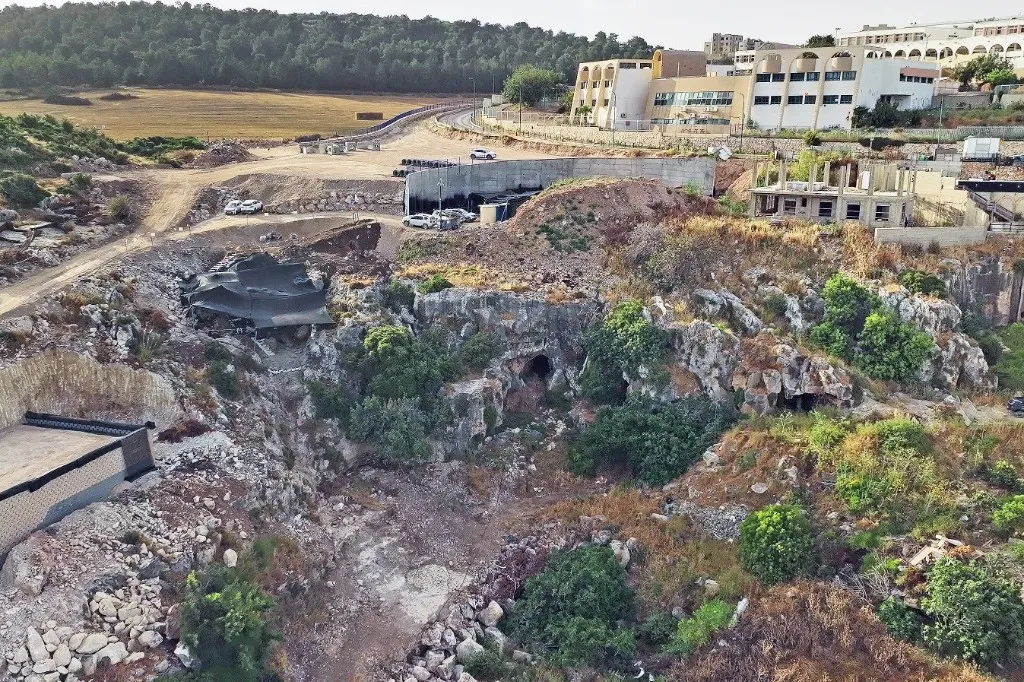
The mikveh was uncovered during an archaeological excavation by the Israel Antiquities Authority, funded by the Israel Land Authority as part of salvage excavations required ahead of the neighborhood’s construction. The work cost about NIS 28 million ($9.2 million).
The discovery provides evidence of a previously unknown Jewish settlement in the area during the Second Temple period, which ended in the first century CE. Archaeologists also uncovered stone measuring vessels, which according to Jewish law were not susceptible to ritual impurity and were therefore widely used by Jews during the period.
The excavation findings indicate that the settlement was apparently abandoned during the Bar Kokhba Revolt, the second-century CE Jewish uprising against Roman rule. The site was revived about five centuries later during the Byzantine period, but with an entirely different population.
As construction advanced, the Israel Antiquities Authority’s Conservation Administration faced the challenge of moving the mikveh without damaging it. Four conservators spent about two weeks preparing the buried structure for removal.
They first excavated around the bath to expose it on all sides. They then drilled beneath it and inserted steel beams to create a supporting framework, allowing the ancient structure to be detached from the ground.
The mikveh’s ancient plaster required additional protection. Conservators covered the walls with gauze and adhesives to prevent vibrations during lifting and transport from causing the plaster to crack or peel. The structure was then reinforced with foam to withstand the stresses of the journey.
The bath’s 25-ton weight, combined with the distance between it and the crane’s base, required a crane with a 300-ton lifting capacity. Its unusual four-meter width also required a wide-load transport vehicle.
The road to Beit Guvrin was closed to traffic during the transfer, with escort vehicles traveling ahead of and behind the truck.
“Once you lift up a structure like this, there is no going back,” said Eyal Kaho, a senior conservator at the Israel Antiquities Authority who led the operation. “If it falls apart, we’ve lost the mikveh. Therefore, every detail must be considered in advance.”
“The day before an operation like this, you don’t sleep,” Kaho added. “You’re under pressure, because the responsibility is yours and there’s simply no price that can compensate for mistakes. Even after 36 years at the Israel Antiquities Authority, every time, the adrenaline rises anew.”
The mikveh will remain in safekeeping while construction continues. Once the new neighborhood is completed, the ancient ritual bath is expected to return to Kiryat Gat and become part of a public open space.