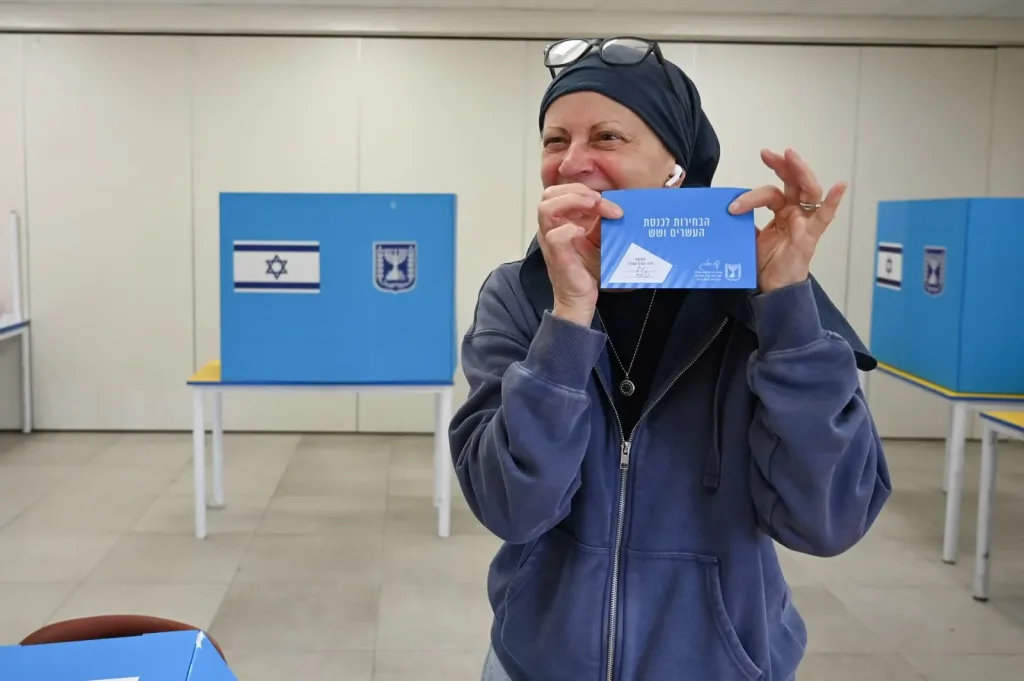
Jerusalem, 27 October, 2026 (TPS-IL) — A record surge of voters is reshaping election day in Israel, and the political headquarters of the governing right-wing bloc are watching the numbers with growing alarm. Prime Minister Benjamin Netanyahu and Finance Minister Bezalel Smotrich are convening an emergency meeting with dozens of municipal heads, seeing a critical moment in the national vote as parties closely monitor turnout and what it could mean for the result.
According to the Central Elections Committee, about 3.29 million Israelis, or 44.9% of eligible voters, had voted by 2 p.m. That is the highest turnout recorded by that hour since 1973. By 5:15 p.m., 4,085,075 Israelis had cast ballots, or 55.7% of the country’s 7,331,981 eligible voters.
The committee also announced that voting is expected to continue beyond 10 p.m. as polling stations handle the volume. Under election procedures, voters already waiting in line when a station closes may still be allowed to vote, so the scheduled closing time will not necessarily mark the end of voting nationwide.
Smotrich cut short his election-day schedule, canceling further visits to polling stations to attend an emergency meeting at the Religious Zionism campaign headquarters. The party says the decision follows high turnout in several Arab communities and at polling stations it described as “the left’s golden polling stations.”
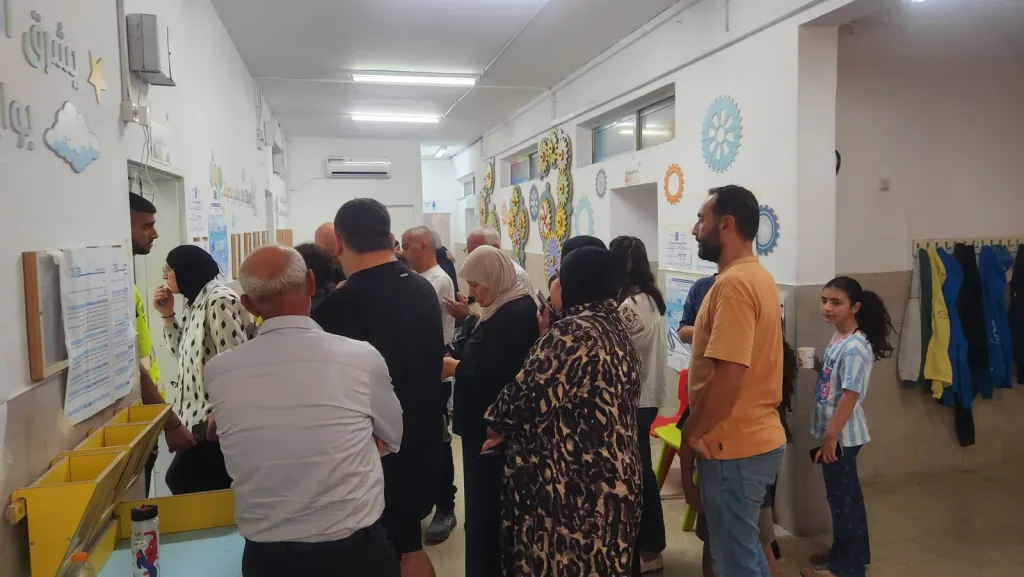
Arab communities are reporting exceptionally high participation. Preliminary figures from major Haredi population centers, by contrast, point to lower turnout than in previous elections at the same hour.
Reports from Bnei Brak, Elad, Beitar Illit, Modi’in Illit and Jerusalem have raised concerns at the Shas and United Torah Judaism headquarters. One suspected factor is frustration over the outgoing Knesset’s failure to resolve the status of yeshiva students facing military conscription. Recent arrests of Haredi draft evaders have also fueled criticism. Meanwhile, newly established Haredi parties aligned with various factions are challenging the established parties and splitting the traditional Haredi vote.
The turnout drama lands in a campaign that had already turned against the government. Polls over recent months have varied: a Maariv survey projected the opposition bloc winning 62 seats, with the current coalition falling to 48 and Shas at just seven. A later Channel 12 poll showed Netanyahu and former military chief Gadi Eisenkot tied at 38% each on who should lead the country, a turnaround for Netanyahu. On the right, Channel 14’s pollster Shlomo Filber predicted 62 mandates for the coalition.
The opposition has also made turnout a central strategy. Five opposition leaders agreed in September to cooperate in boosting participation, pledging to work within their constituencies to bring out voters. Netanyahu responded at the time that “only a strong Likud” could stop them.
Israel is also holding its sixth national election since 2019, and the first in 38 years to arrive at the natural end of a full Knesset term.
High turnout is threatening to swallow parties near the electoral threshold. Ofir Winter, chairman of the Am Yisrael party, responded to the figures after a situation assessment at its headquarters. “According to our analyses and the information we have, the battle is close, and every vote will decide,” he said, urging supporters to push the party “from four to five seats, and even more.”
Winter’s fledgling party had prepared for a turnout of roughly 180,000 votes, and says it is encouraged by the number of voters. Winter dismissed what he called “orchestrated panic” against his party as expected, and said the data show momentum in its direction. However, the retired brigadier-general may need to check his math. Amcha Yisrael’s 180,000 projected votes (which in itself is a shaky concept) represent a fixed quantity. However, the number of votes required per Knesset seat is unknowable and can only be realized once all the legal votes have been counted. At that point, a seat would cost N:120, with N being all the votes. The result might be well over 180,000 votes, which means that all of Winter’s vote would be thrown in the trash bin.
Winter urged supporters to bring family and friends to the polls, and said that continuing on this path would prevent “a government of Abbas and Golan,” a reference to Ra’am leader Mansour Abbas and Democrats leader Yair Golan. But in the end, should the right bloc be deprived of Winter’s votes, this might usher in the Abbas-Golan government.
Turnout alone does not decide an Israeli election. Seats are allocated proportionally, and the result depends on which parties clear the threshold and how votes distribute across blocs. But the early pattern is what has rattled the right this entire day: unusually high participation in Arab communities and in areas the right sees as favoring its opponents, alongside softer numbers in Haredi strongholds that the coalition relies on.
Campaign headquarters on all sides will spend the evening comparing live figures with their own models. With voting set to run past the official closing time, no party can call the outcome yet. The emergency meetings under way at the top of the governing bloc suggest that, for now, the right is not taking anything for granted.