Jerusalem, 4 November, 2026 (TPS-IL) — Israel’s president urged political leaders Wednesday to put aside campaign promises and find common ground to form a government, as he formally accepted election results that left the country without a clear parliamentary majority. Isaac Herzog also warned against turning allegations of foreign interference in Arab communities into a pretext for racist attacks against Israel’s Arab minority.
“I ask for originality and creativity, courage and goodwill, so that the State of Israel emerges the winner,” Herzog said at the President’s Residence in Jerusalem. He urged faction leaders to judge potential political arrangements by “what is truly best for the country at this time,” rather than treating every campaign commitment as binding.
The president warned that refusing to compromise could send Israelis back to the polls. “The various factions and their representatives must understand that they cannot abide by every commitment and promise made during the election campaign,” he said.
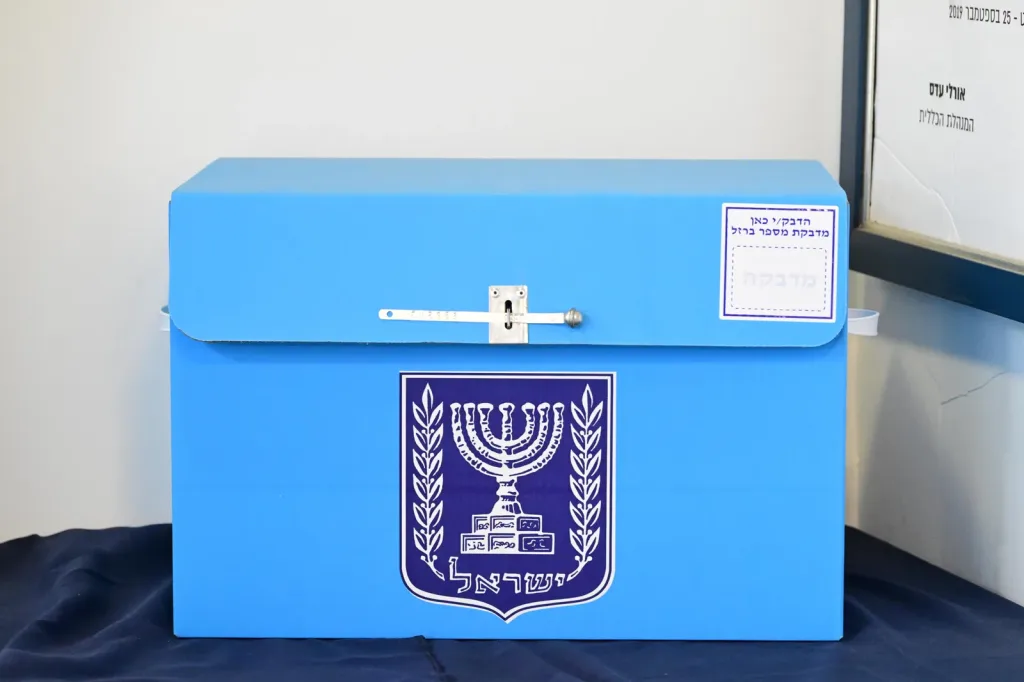
The October 27 election produced no decisive winner, leaving the country facing potentially difficult coalition negotiations. Herzog’s appeal came as he began the constitutional process of consulting representatives of the parties elected to the 120-member Knesset before choosing a lawmaker to lead government-formation efforts.
Herzog’s remarks also addressed a separate controversy threatening to overshadow the election outcome: suspicions that foreign interests attempted to influence voting in Arab communities. The Shin Bet security agency is investigating allegations that money from abroad, reportedly involving Qatar and Turkey, was used to affect voting patterns.
“Beware of generalizations,” Herzog said. “I hold Arab society in Israel in great respect. I value its contribution to the country in every area of life, and its desire to integrate.”
“I condemn the coarseness and racist expressions that we have heard recently. There is no place for them toward any community in Israel,” he added.
Central Elections Committee chairman Supreme Court Deputy President Noam Sohlberg, who formally presented the results to Herzog, similarly warned against allowing unproven allegations to undermine public confidence in the vote.
“These suspicions in no way cast doubt on the voting of Arab society. A high voter turnout is a welcome thing,” Sohlberg said. He described attempts to cast doubt on the overall results as a “real danger” to democracy, warning that public acceptance of election outcomes was essential to peaceful transfers of power.
Sohlberg asked the Shin Bet to investigate, saying the Central Election Committee did not have the ability to investigate the allegations.
The final distribution of the 120 parliamentary seats gives Netanyahu’s Likud 27, Yashar! 21, Together 12 and the Joint List 11. Ra’am and the Democrats each won eight seats, while three parties secured seven apiece and two others received six.
Herzog will meet with representatives of Religious Zionism-Zehut, Shas and Yisrael Beiteinu. Thursday’s meetings will include United Torah Judaism, Otzma Yehudit, the Democrats, Ra’am, the predominantly Arab Joint List, Beyachad, Yashar! and Likud.
Prime Minister Benjamin Netanyahu’s Likud party emerged as the largest in the Knesset, while the opposition camp led by Gadi Eisenkot is the larger parliamentary bloc. The two Arab parties combined to win an unprecedented 19 seats.
After completing the consultations, Herzog will designate a member of the Knesset to form the next government. Under Israeli law, the designated lawmaker will have 28 days to assemble a government, with the president authorized to grant an extension of up to 14 additional days.