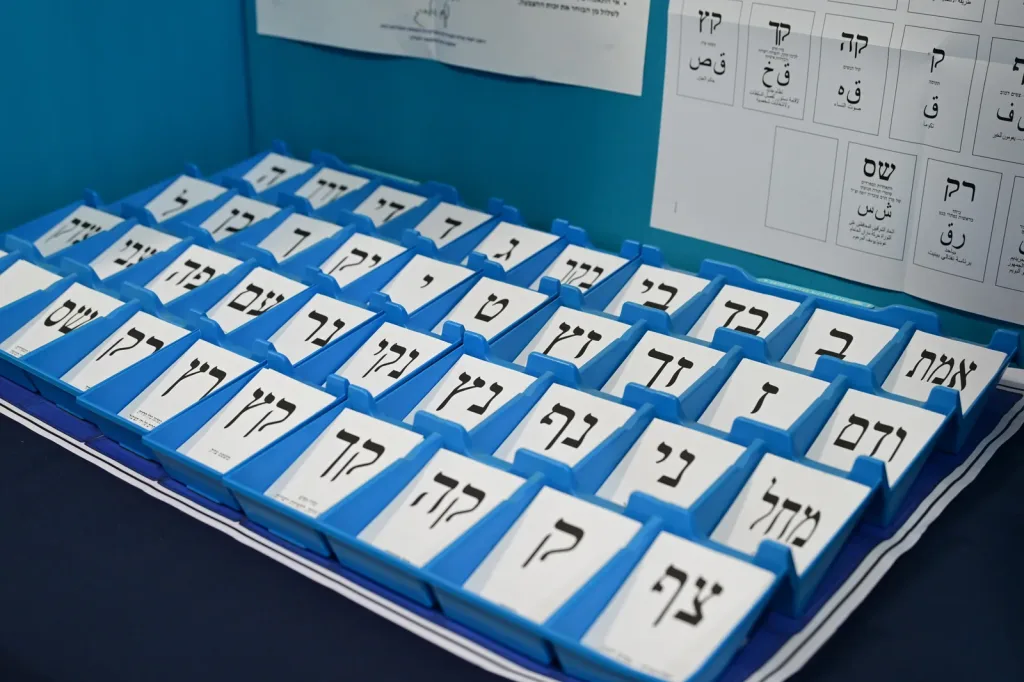
Jerusalem, 4 November, 2026 (TPS-IL) — Israel’s election authorities approved the final results of the Oct. 27 parliamentary election, allowing the process to move toward the formation of a new government despite allegations of foreign interference and voter manipulation.
The Central Elections Committee voted 15-2 with 14 abstentions to approve the results Wednesday after the chairman Supreme Court Justice Noam Sohlberg directed that they be submitted for consideration. The move came amid a dispute over whether allegations of foreign involvement in the election should delay its formal approval.
The controversy centers on claims that foreign actors attempted to influence voting, particularly in Arab communities, through payments, voter manipulation and other forms of interference. The allegations raised questions about the security of Israel’s electoral process, but have not established that the overall outcome was affected.
Likud, Prime Minister Benjamin Netanyahu’s party, abstained from the committee vote rather than oppose certification. The decision exposed a divide between the party’s participation in the formal approval process and objections raised by some of its representatives.
Amit Halevi, a Likud member of the Knesset who served on the committee, resigned in protest. He argued that approving the results before the allegations were resolved undermined the committee’s authority and responsibility.
Halevi maintained that the allegations were not simply complaints about irregularities at individual polling stations, but involved possible intervention by foreign countries with national security implications. He also pointed to claims of payments and efforts to manipulate votes in Arab communities, saying the results should not be approved until those matters were addressed.
The dispute has unfolded against the backdrop of an election that left neither of the two main political camps with the 61 seats needed to control the 120-member Knesset. Likud finished first with 27 seats, while former military chief Gadi Eisenkot’s Yashar! party won 21. Arab-led parties secured a combined 19 seats, making their position particularly significant in the post-election political calculations.
The developments came as Israeli President Isaac Herzog’s office said he will break with tradition by beginning consultations on forming the next government with the Knesset’s smallest political factions on Wednesday, seeking to explore alternative coalition possibilities before meeting with the larger parties.
Herzog will meet with representatives of Religious Zionism-Zehut, Shas and Yisrael Beiteinu. Thursday’s meetings will include United Torah Judaism, Otzma Yehudit, the Democrats, Ra’am, the predominantly Arab Joint List, Beyachad, Yashar! and Likud.
Prime Minister Benjamin Netanyahu’s Likud party emerged as the largest in the Knesset, while the opposition camp led by Gadi Eisenkot is the larger parliamentary bloc. The two Arab parties combined to win an unprecedented 19 seats.
After completing the consultations, Herzog will designate a member of the Knesset to form the next government. Under Israeli law, the designated lawmaker will have 28 days to assemble a government, with the president authorized to grant an extension of up to 14 additional days.