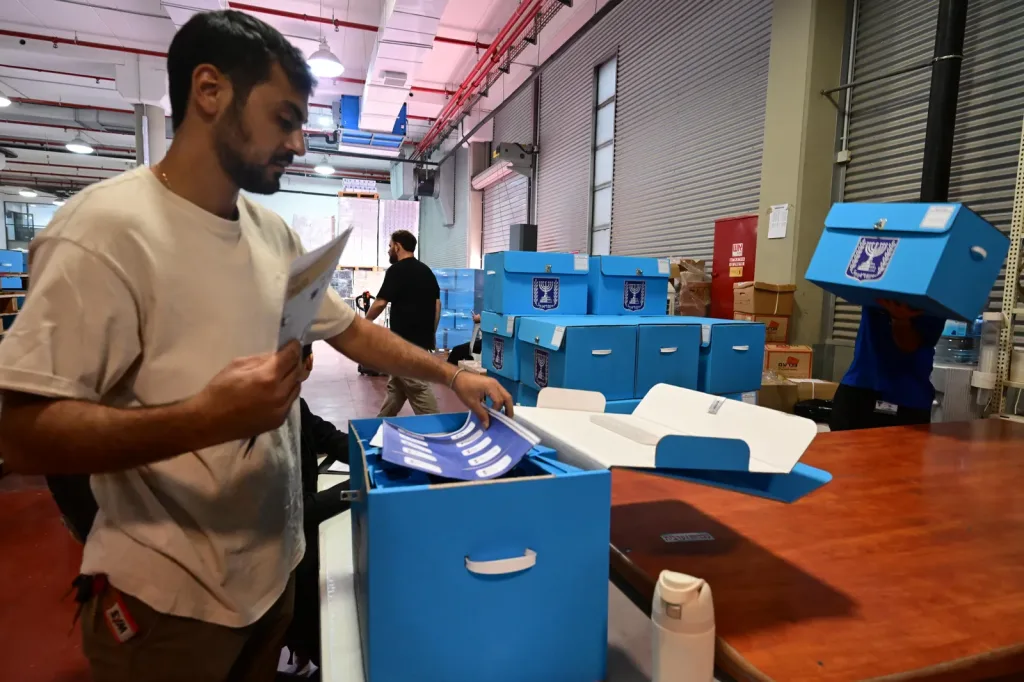
Jerusalem, 15 October, 2026 (TPS-IL) — Twelve days before Israelis vote on Oct. 27, growing distrust of the electoral process is raising questions about whether the losing side will accept the results.
A survey by the Israel Democracy Institute (IDI) found that 70% of respondents believed the election’s integrity was under threat, up from 25% before the November 2022 election. “The results of the survey reflect an enormous mistrust among citizens toward the authorities,” IDI researcher Tamar Hermann said.
The suspicions differ by political camp.
Left-wing politicians and Arab citizens fear government interference, while members of the Arab list Hadash-Ta’al have warned of possible voter suppression in Arab-majority communities. Critics have also accused Transportation Minister Miri Regev’s office of restricting flights into Ben Gurion Airport before election day, potentially preventing left-leaning Israelis abroad from voting against Prime Minister Benjamin Netanyahu.
On the right, politicians and commentators have long alleged widespread fraud in Arab communities. Past elections, however, illustrate how such claims can become a political mobilization tool.
In April 2019, Likud acknowledged deploying 1,200 poll workers with cameras, some concealed, at polling stations in Arab communities. Netanyahu said the cameras were intended to prevent fraud, while Arab political representatives accused the party of intimidating voters. Police found sufficient grounds for a criminal investigation at only one of the 140 polling stations flagged, and Likud lawmaker Miki Zohar later acknowledged that the initiative had backfired, encouraging Arab turnout while giving some right-wing voters a false sense of security.
This year, Likud and Religious Zionism are expected to deploy about 2,000 election observers at polling stations in Arab-majority communities. The observers will report suspected irregularities to the authorities.
Election-law violations have also occurred. In 2020, the Central Elections Committee found that Shas violated restrictions on gifts linked to election propaganda by distributing amulets. Although such violations do not establish ballot fraud, they can deepen public distrust of the electoral process.
Technology has added another dimension. Israeli media have reported that accounts based outside Israel, with Iran-linked ties, circulated claims in Arabic, Russian and English that the election would be postponed or suspended because of foreign interference. The accounts also amplified allegations that Netanyahu would rig the election or start a new war.
Central Elections Committee Chairman Noam Sohlberg sought to reassure the public during a tour this week of the country’s 20 regional election committees.
“We at the committee are confident in the integrity of the elections. You cannot steal an election,” he said.
Sohlberg added that the committee had held discussions with the Israel Security Agency (Shin Bet), police and other agencies to prepare for potential threats involving computer systems, cybersecurity and artificial intelligence.
According to the IDI’s 2025 Israeli Democracy Index, 57% of Israelis feared attempts by domestic or foreign actors to manipulate the vote, while roughly one-third were not convinced the elections would be free and fair. A separate IDI survey in July 2026 found that 90.5% of left-wing respondents perceived a genuine threat to election integrity.