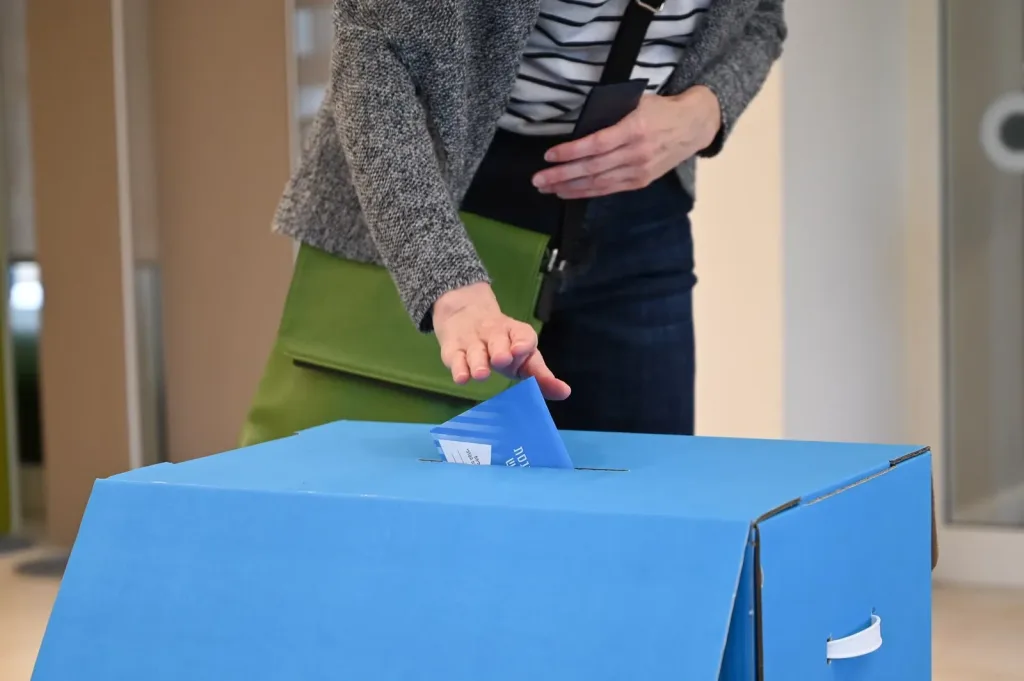
Jerusalem, 29 October, 2026 (TPS-IL) — Political leaders across Israel’s political spectrum issued sharply differing responses Thursday to suspicions of foreign interference in the country’s elections, with Likud describing the affair as an “earthquake,” opposition figures calling for a thorough investigation, and Arab social media users accusing the right of seeking to delegitimize Arab political participation.
The reactions followed a letter sent Thursday morning by Central Elections Committee Chairman and Supreme Court Deputy President Noam Sohlberg to Israel Security Agency (Shin Bet) chief David Zini, calling for an investigation into suspicions of foreign funding and election bribery.
“Serious suspicions have been brought before me of improper influence on the elections through foreign funding from foreign entities operating against Israeli interests,” Sohlberg wrote.
Sohlberg acknowledged that he could not independently assess the allegations but said the possibility of foreign involvement warranted an investigation.
The allegations emerged against the backdrop of a sharp rise in Arab voter participation, with the Joint List and Ra’am projected to secure a combined 19 seats in the 120-member Knesset as vote counting reached 90 percent.
‘An Earthquake’
Likud called the affair an “earthquake,” declaring that Qatar and Turkey “stole the elections in Israel!” The party characterized the suspected activity as an attack on democracy intended to bring foreign control of the Knesset, promote the Islamization of Israel, end right-wing rule, and force an Israeli withdrawal and military defeat on multiple fronts. The party did not provide any evidence of Qatari or Turkish involvement.
Yashar! party chairman Gadi Eisenkot called for protecting election integrity and thoroughly examining every complaint. He also warned against political actors exploiting the allegations to influence the date of the Knesset’s swearing-in.
Yisrael Beytenu chairman MK Avigdor Liberman described Sohlberg’s letter as a “dramatic and unprecedented development” and urged law enforcement to establish the facts swiftly.
Yisrael Beytenu MK Vladimir Beliak called on Sohlberg to urgently convene the Central Elections Committee’s presidium and present the evidence underlying the suspicions. Beliak questioned who had brought the allegations to Sohlberg and what evidence had been provided. He also cited a police clarification issued Thursday stating that, contrary to claims by certain political figures, there was no evidence of systematic violations of election integrity.
United Torah Judaism chairman MK Yaakov Asher criticized politicians who had portrayed Haredi parties as enemies during the election campaign.
“You’ve got it all mixed up. You turned us, who are loyal to the Jewish people and its Torah, into enemies, while on the other side, suspicions are emerging of votes being bought with money from enemy states,” he said.
Finance Minister Bezalel Smotrich called the suspicions a test for Israel and demanded that the Shin Bet question the leaders of the Arab parties that day.
“The State of Israel will not be sold to radical Islam with terrorist money,” he said.
Arab social media users, meanwhile, criticized the allegations and accused right-wing politicians of seeking to undermine the legitimacy of Arab political participation.
Some drew a comparison between the reported rapid deployment of the Shin Bet to examine suspected election interference and what they described as years of inadequate action against crime in Arab communities. Others characterized the allegations of illicit Qatari and Turkish funding as a politically motivated conspiracy intended to disqualify Arab votes or challenge the election outcome.
No official response from Arab political leaders had been issued at the time of publication.
Orly Ades, a lawyer and former director-general of the Central Elections Committee, called for a thorough investigation while cautioning against premature conclusions. She said public confidence in elections was a cornerstone of Israeli democracy.
“Suspicions of improper interference require a thorough and exhaustive investigation to establish the truth,” Ades said. “The authorized authorities must be allowed to complete their work, establish the truth, and act in accordance with their findings.”