By David Israel • October 7, 2026
Jerusalem, 7 October, 2026 (TPS-IL) — On October 7, 2023, Ofakim became one of the deadliest sites of Hamas’s assault on southern Israel, as roughly 15 Nukhba terrorists entered the city in vehicles and were ultimately stopped largely by armed residents and local heroes who fought them off until security forces arrived.
Ofakim did not suffer the widespread physical destruction seen in kibbutzim or cities hit by heavy rocket fire or tank battles, but it endured a devastating human and psychological toll: 48 residents and police officers were killed as the attack evolved into fierce street battles in residential neighborhoods.
An Israel Defense Force (IDF) inquiry concluded that the military arrived far too late to stop the massacre, and soldiers failed to coordinate with local police. The attack was repelled largely through the courage of 58 residents, police officers and retirees who took up personal weapons and fought the terrorists until security forces were able to effectly mount a response.
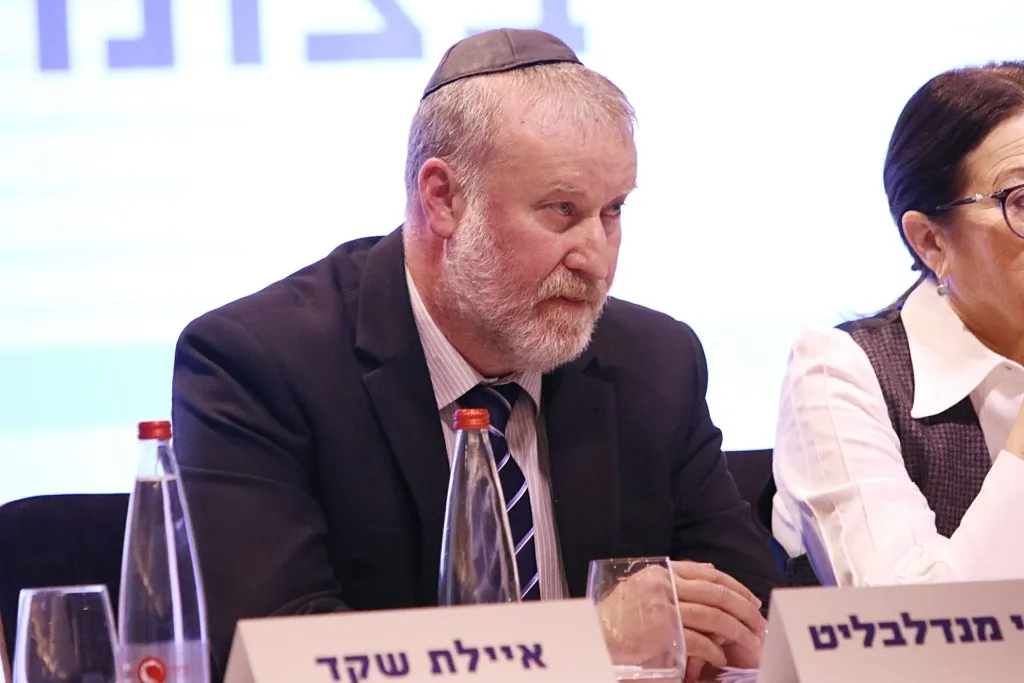
Ofakim Mayor Mayor Itzik Danino (left with an interpreter) at a press conference depicting the rise of his city from devastation to prosperity, October 6, 2026. Photo credit: Brett Goodman, TPS-IL
Three years later, Mayor Itzik Danino’s vow that Ofakim would not merely recover but grow stronger appears to be bearing out.
Real estate brokers describe demand that began rising even before October 7 and accelerated sharply afterward, particularly in the rental market, as waves of evacuees from Gaza border communities arrived and filled the city’s housing stock, especially apartments with reinforced safe rooms and elevators. Dozens of transactions were recorded within months of the attack despite the shock of the massacre, and the pace only picked up through the following year.
Danino told The Press Service of Israel that Ofakim’s population has grown from about 24,000 three years ago to roughly 55,000 today, with the city’s future 80,000th resident signing a lease on Tuesday itself. “That growth is remarkable when you consider what Ofakim endured,” he said.
Danino explained that when the first rockets began striking the city at 6:29 A.M., many shelters were closed because residents had not received warnings, and terrorists had entered Ofakim within 10-15 minutes of the first alerts.
The mayor noted that while the physical threat from Gaza has eased dramatically, the psychological wounds remain with more than 5,000 residents dealing with trauma-related disorders, treated by roughly 90 psychologists and psychiatrists.
“But Ofakim is not defined by October 7,” Danino stressed. “It is defined by what happened afterward.” He pointed to an innovation hub housing more than 20 startups, agricultural-technology research labs positioning the city as an agri-tech center, and security upgrades including a doubled police force, guarded entrances after 11 p.m., and more than 2,000 smart cameras.
“These measures cannot erase what happened,” he said. “But they demonstrate something important: Ofakim was attacked because its enemies believed they could break it. Instead, Ofakim is growing.”
By 2025, Ofakim recorded an 18.9% rise in apartment prices, among the sharpest of any Israeli city, even as the broader national market cooled and unsold inventory piled up elsewhere. Central Bureau of Statistics data showed Ofakim surging to first place nationally in new apartment sales, with 706 units sold in a recent reporting period, a 72.6% jump, outpacing even Tel Aviv in sales growth. Brokers describe projects selling 30 apartments a month, a pace one veteran agent called “irrational” for a city on the Israeli periphery.
The boom reflects more than post-attack solidarity. Significant tax benefits for residents of Ofakim, Netivot and Sderot have begun pulling buyers away from nearby Beer-Sheva, while falling interest rates and a backlog of delayed purchases have further fed demand. The city plans to add roughly 13,000 housing units in already-approved neighborhoods as it pushes toward a population of 100,000.