


By Pesach Benson and Brett Goodman • September 17, 2026
Jerusalem, 17 September, 2026 (TPS-IL) — Palestinian social media channels followed by hundreds of thousands of people have praised and encouraged the poisoning of Israeli-owned livestock in Judea and Samaria, amid a series of at least ten suspected poisoning incidents documented by The Press Service of Israel over the past year.
At Metzudat David Farm, a small Israeli farm in the Binyamin region north of Jerusalem, the consequences were immediate. A shepherd had just led his herd out to graze when one of his goats suddenly began showing signs of poisoning.
“We arrived at the grazing area. As we entered, I suddenly noticed a goat showing signs of poisoning,” he recalled. “There was foam coming from its mouth. A soldier happened to be here, so I immediately reported it to his commander.”
The goat died within seconds. Within two minutes, a second goat collapsed and died as well. Scattered around nearby trees, the shepherd found pieces of pita bread packed with a blue substance — bait, he said, deliberately left for the animals to eat.
TPS-IL spoke with farmers and shepherds across the region, as well as Israeli officials. The attacks are concentrated largely around farms near the Palestinian village of al-Mughayyir in the Binyamin region, and farmers attribute them to residents of the village.
The attacks generally follow one of two patterns: poison mixed into food, usually dates or pita bread, and scattered in grazing areas, or poison introduced directly into water cisterns and troughs used to water herds during the summer heat. Both methods can kill animals within minutes.
A Routine Built Around Danger
The shepherd, a minor, talked to TPS-IL on condition of anonymity because he has received personal threats from Palestinians. The repeated poisonings have reshaped how he approaches his daily work.
“Because we went through a period of frequent poisonings, now I automatically pay attention,” he told TPS-IL. Before releasing the herd into a field, he scans the ground for pita bread or dates — the items goats are most likely to eat first. “Sometimes you find it before they’ve had a chance to eat it, and then you immediately drive them as far away as possible,” he explained.
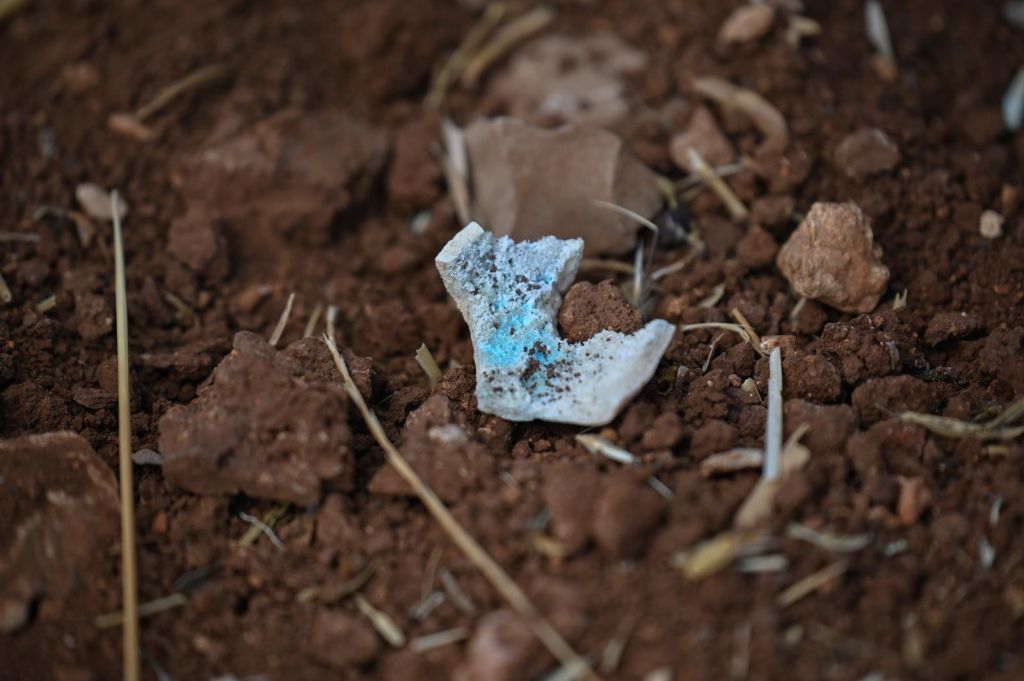
A piece of pita laced with blue Lannate pesticide found on Jewish grazing land near the Palestinian village of Al-Mughayyir in the Binyamin region north of Jerusalem on Sept. 2, 2026. Photo by Yoav Dudkevitch/TPS-IL.
He described the water-based attacks as harder to detect. “You pull water from the cistern, you smell it, you see the color of the water — it’s not the color of normal water,” the shepherd said, describing water that sometimes turns yellow. He added that the perpetrators have also thrown animal carcasses into cisterns to contaminate the water supply.
The consequences extend well beyond the animals lost in a single incident, he said. In summer, when herds must be watered in the field due to the heat, a poisoned cistern forces the farm to find alternate water sources for the herd or bring animals back to base more frequently — while also posing a lasting risk. “If a shepherd who doesn’t know a cistern has been poisoned waters his herd there in the evening, he can come back and find his goats dead,” he said.
A Year of Documented Attacks
TPS-IL’s investigation identified a cluster of poisoning incidents across farms in the Binyamin region over the past twelve months. In November 2025, a water cistern at Shivat HaRoim Farm near Maale Levona was poisoned, killing three sheep initially and six more about two weeks later after the herd was again watered from the same source. Around the same time, suspected poisoning near Malachei Avraham Farm in the Hebron Hills left several herding dogs severely ill and killed one sheep.
On Nov. 16, poisoned dates were found scattered across a grazing area near Metzudat David Farm, killing at least two goats. Israeli authorities arrested a Palestinian from al-Mughayyir on suspicion of involvement. Further suspected poisoning attempts were reported in January and February 2026, including incidents near the Palestinain village of Aboud, Shlisha Farm and Metzudat David Farm, with poisoned bait discovered before animals could reach it in some cases.
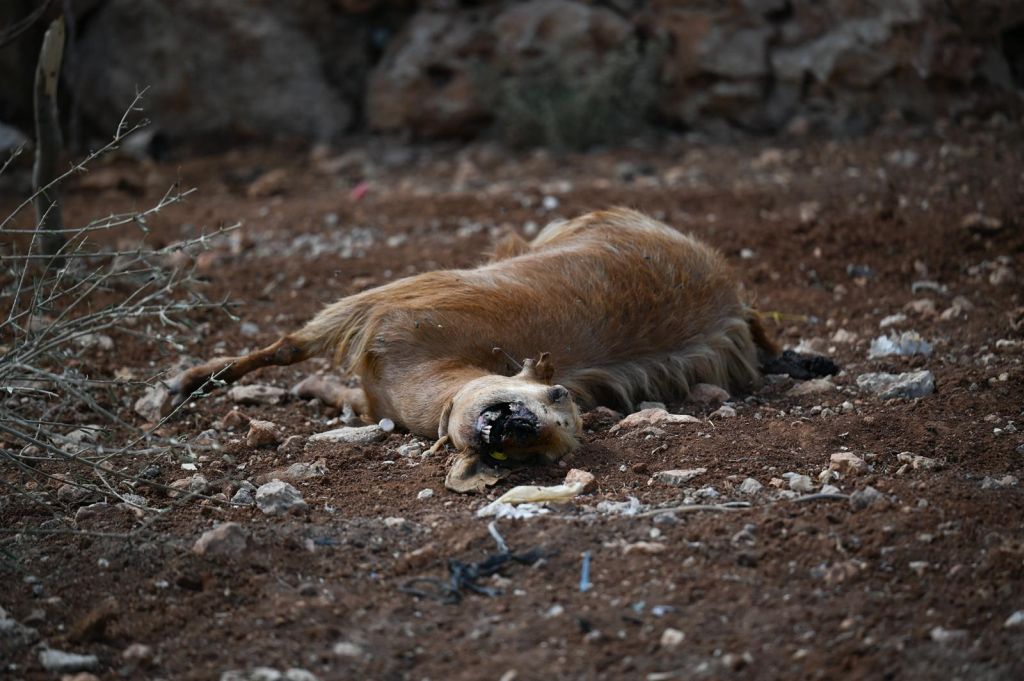
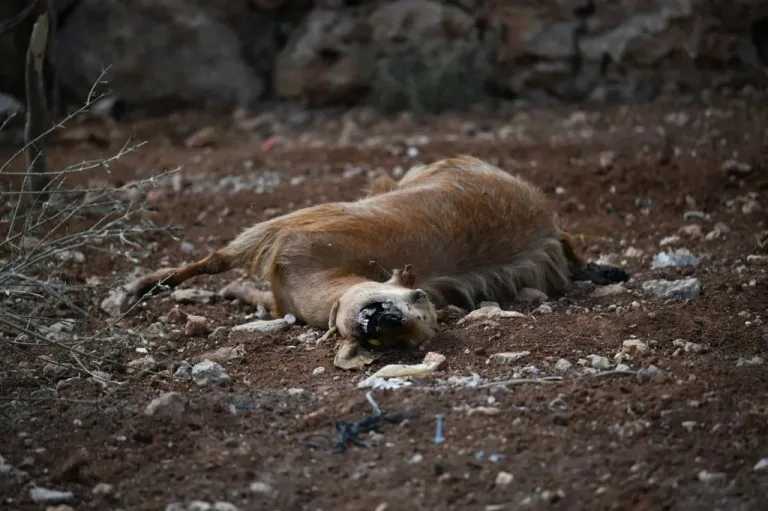
The carcass of a goat belonging to an Israeli farmer lies on Jewish grazing land near the Palestinian village of Al-Mughayyir in the Binyamin region north of Jerusalem, Sept. 2, 2026. The goat is one of several believed to have died after ingesting poison. Photo by Yoav Dudkevitch/TPS-IL.
On May 5, roughly ten water cisterns near Alon Road, close to al-Mughayyir, were found to have been poisoned. Sheep that drank from the cisterns were seen convulsing and foaming at the mouth before the herd was moved away. On June 7, an attack at Shlisha Farm killed two sheep and sickened about 15 more. In July, poisoned food bait was found near Tel Talpiot, close to Gush Shiloh; two guard dogs died within minutes and one goat reportedly died as well.
Farmers in the area have also reported additional suspected poisoning incidents for which exact dates and full details are still being confirmed, including at farms near Nahal Shiloh, Shivat Achim and in the area of Bat Ayin.
‘Every Piece of Land We Move Into’
At Shlisha Farm, a farmer described a similar ordeal centered on the farm’s water cistern. The farmer talked to TPS-IL anonymously because he too has received personal threats from Palestinians.
“This is the water cistern we use to water the herds when they’re out grazing in the heat during the day,” he said. “One day, the shepherd came here and filled the trough with water. A few minutes later, he saw several sheep convulsing and dying. The water had apparently been poisoned. Arabs from the surrounding area had poisoned the water here,” he recalled to TPS-IL.
He said the farm immediately began treating the surviving animals with activated charcoal to counter the poison. “About five months ago, two sheep died here and around ten others were affected. Thank God, we managed to save the rest,” he said. The cistern has not been used since. “We can’t use this water now,” he said. “Even though it looks clean, clear and transparent, it appears to be poisoned.” He said dozens of other cisterns in the area have been poisoned as well, with close to ten sheep lost from his herd alone — “and that’s just from our herd. There are other herds in the area that have also been badly affected.”
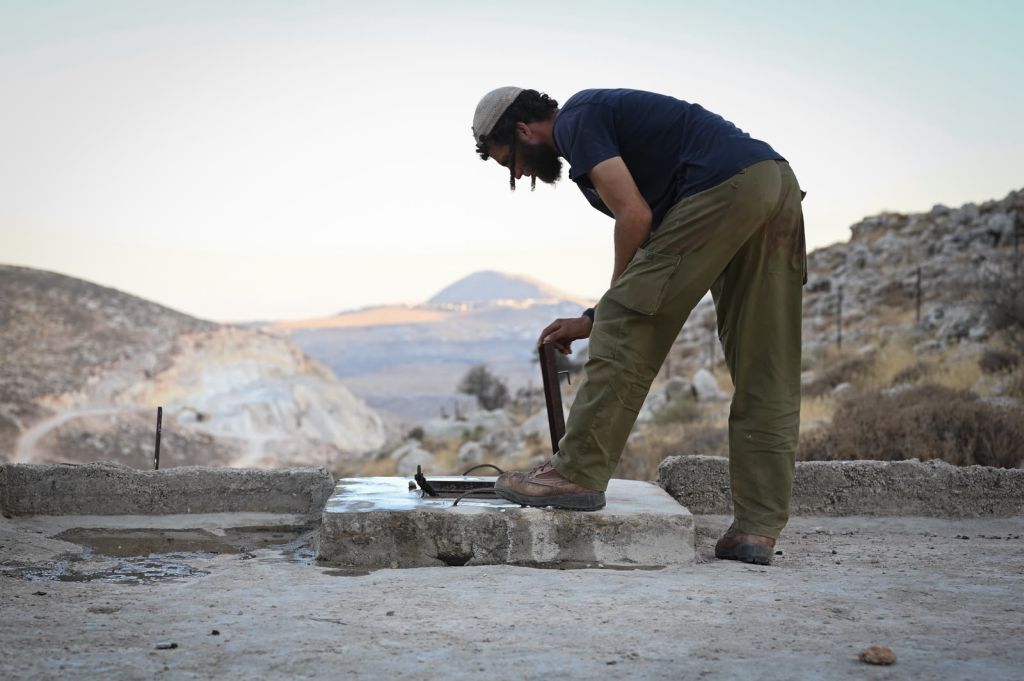
An Israeli shepherd checks a cistern on Jewish grazing land in the Binyamin region north of Jerusalem, Sept. 2, 2026. Photo by Yoav Dudkevitch/TPS-IL.
The farmer said the disruption lingers long after the animals are lost. “It makes our daily lives much harder, because we have to go back to the farm to water the herd, and we can’t stay out in the field,” he said, describing round trips that can stretch several kilometers during the summer heat. “The consequences of poisoning the water cisterns are long-term,” he said.
He described a pattern in which attackers appear to track the farm’s movements. “Whenever we move into a new grazing area, they come at night and poison it, and the next day we deal with the consequences,” he said. He credited volunteers who mobilize on short notice to help collect poisoned bait and materials from the field, including during difficult winter weather.
A Wave of Online Support
The attacks have recently coincided with a burst of public support across Palestinian social media channels. In the final days of August 2026, TPS-IL identified a cluster of posts on Telegram, some reaching hundreds of thousands of subscribers, praising past poisoning attacks and calling for more.
On August 27, a channel called Mesh Heek, with roughly 390,000 subscribers, described “five consecutive poisoning operations” targeting Israeli-owned flocks near al-Mughayyir as an act of creative resistance. Similar posts describing the same “five poisoning operations” and warning that “the next one will be bigger” appeared the same day on channels based in Bethlehem and Tulkarem, using the shared hashtag that translates to “Deterring Settlement.”
By the early hours of August 28, a channel called Jenin News, with roughly 236,000 subscribers, published a more direct message calling on readers to poison Israeli-owned livestock and cause them financial losses. A similar post appeared the same day on a Salfit-based channel with roughly 13,200 subscribers.
TPS-IL’s review found that the same core message, or closely similar versions of it, appeared across at least five separate Palestinian channels within 48 hours. As of mid-September, TPS-IL had not identified a comparable new wave of similar calls.
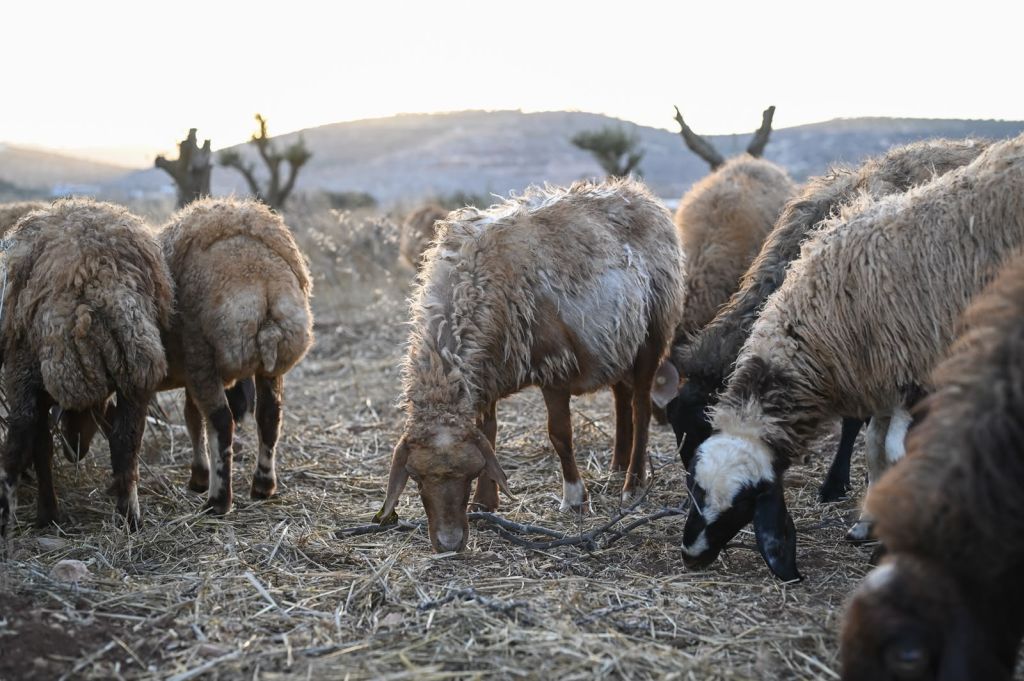
Sheep belonging to Israeli farmers graze on Jewish grazing land in the Binyamin region north of Jerusalem, Sept. 2, 2026. Photo by Yoav Dudkevitch/TPS-IL.
Official Response
In response to TPS-IL questions, the Civil Administration — the military body responsible for administering civilian affairs and coordinating government services in Judea and Samaria — said in a statement it “takes very seriously any incident in which grazing areas or water sources are suspected of having been poisoned, and acts to examine every case brought to its attention.”
“Once a report is received by the Civil Administration’s professional teams, samples of the suspected material are taken and sent for testing at the Agriculture Ministry’s laboratories in Beit Dagan, in order to identify the substance and determine the necessary next steps,” it added.
The Civil Administration added that it “attaches supreme importance to protecting the environment in Judea and Samaria, and acts within its authority to locate and address environmental hazards and to reduce harm to open areas and water sources.”
Israel Police, which is responsible for investigating the incidents, did not respond to TPS-IL questions about the number of poisoning cases reported, their investigative status, laboratory results on suspected substances, whether a pattern is being tracked, and what enforcement measures are being taken to prevent further incidents.
The Ministry of National Security, which oversees the police, also did not respond to TPS-IL queries.
TPS-IL also reached out to the al-Mughayyir municipality for comment but received no response.
Broader Pattern
To place the attacks in wider context, TPS-IL spoke with Roee Gilead, an inspector for the Israel Nature and Parks Authority who covers the Binyamin region and the southern Jordan Valley. Gilead said poisoning as pest control is not new to Judea and Samaria, noting that Israeli farmers have also used poison against jackals, foxes and wolves, while beekeepers have used it against honey badgers.
The Authority established a canine detection unit after a 2008 poisoning incident devastated Israel’s vulture population through “secondary poisoning,” in which scavengers feed on poisoned animals and are themselves poisoned.
Gilead said the past two years have seen what he described as “a kind of war over grazing areas,” with poison allegedly placed by Palestinians in dates, bread or scattered directly in grazing fields used by Israeli herds.
“It’s very difficult to find the person responsible,” he said, noting that no perpetrator has been definitively identified in most cases. “This is what’s suspected — that it’s a conflict between shepherds, Palestinians and Israelis, over grazing land.”
Gilead identified the substance most often found in these cases as a commercially available pesticide known by the brand name Lannate, sold in ordinary stores, that can kill in minutes if ingested in sufficient quantity. He said his unit’s rangers and trained detection dogs respond when farmers report incidents, collecting bait, contaminated food and animal carcasses from the field and sending them for laboratory testing.
As of publication, Israel Police investigations into the majority of the documented incidents remain open, with no perpetrators publicly confirmed in most cases.