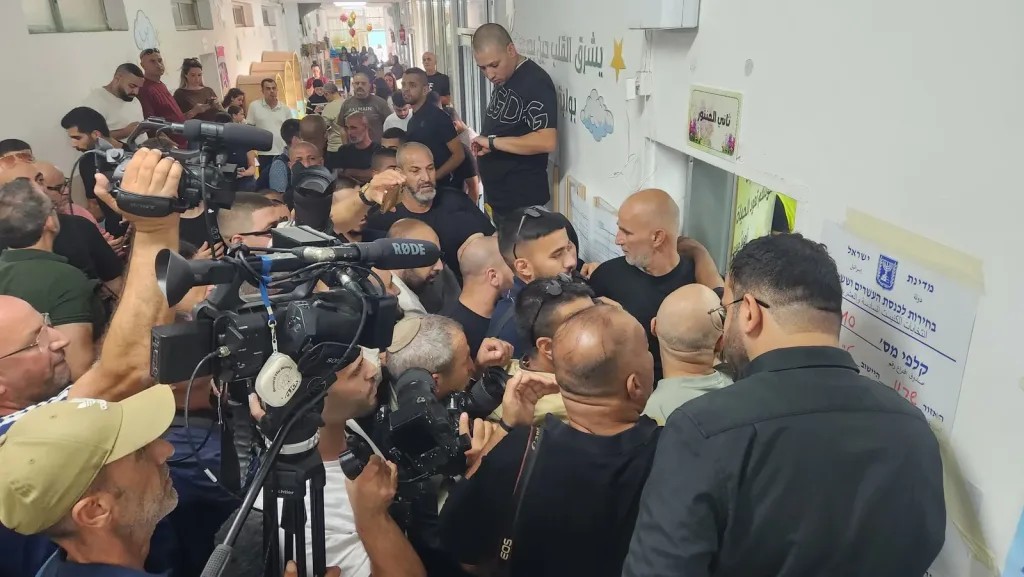
Jerusalem, 16 November, 2026 (TPS-IL) — The Likud party intends to challenge the results at 190 polling stations in the Arab sector. It says evidence has accumulated of cash and fuel vouchers being handed to voters on behalf of the Joint List. It also alleges that an app was used to track voter data, contrary to the directive of the Central Elections Committee chair.
The voter-data tracking was reportedly intended to encourage Arab citizens to go to the polls. Turnout in the Arab sector was the highest on record, and the Arab parties together won 19 of the Knesset’s 120 seats.
Likud has filed more than 1,200 complaints with the Central Elections Committee. The complaints cite interference with voting, photographing inside polling stations, and the distribution of money and fuel vouchers to people who showed proof they had voted for the Joint List. The committee chair said some of the complaints will be passed to the police for examination.
The committee announced today that a review of election materials, conducted at Likud’s request so it could file its appeal, ended last night. Likud was given the polling-station committee forms listing the names of voters at the stations where it alleges the integrity of the vote was compromised. Likud is now expected to file its appeal.
Separately, it emerged yesterday that the police source in a second affair, regarding suspected foreign-state involvement in the election, was a former employee of the Prime Minister’s Office. His information, relayed through the head of Netanyahu’s bureau, led to the arrest of three Ra’am activists on suspicion of election bribery. The suspects were later released, and the case against them is reportedly about to be closed.
On election morning, police announced that they had raided the homes of the three activists and arrested them. Envelopes containing cash were found at the home of one of them, a physician, and police said the money was suspected of being used to get voters to the polls to vote for Ra’am. Later that day, reports said Qatar or Turkey was suspected of involvement. The suspects’ detention was extended, but they were released the following day after police failed to present sufficient evidence of attempted election bribery. The case is expected to be closed without an indictment.
Journalist Ilana Dayan reported last night that the arrests followed information passed to police by Danny Greenberg, a former employee of the Prime Minister’s Office. Greenberg, who until about six months ago was an aide to the Prime Minister’s Office Director-General Yossi Shelly, was introduced to a Southern District police officer by Ido Norden, head of Netanyahu’s bureau.
The evening before the election, Norden phoned Police Commissioner Danny Levy and briefed him on the information. Levy referred Norden and Greenberg to the Southern District, where the intelligence coordinator classified Greenberg’s information as intelligence in the police computer system. On that basis, and without a search warrant, officers raided the activists’ homes the next morning.
Following the reports, Levy tasked his deputy, Yair Hetzroni, with examining the police’s conduct that day, including decision-making, the reporting chain, coordination between units and the division of responsibility. Hetzroni is to report his conclusions within a week.
When the activists were arrested, it became known that the Shin Bet had joined the matter, investigating whether a foreign state had tried to influence the election’s outcome. Shin Bet head David Zini sought to question Joint List and Ra’am Knesset members under caution. Attorney General Gali Baharav-Miara resisted, refusing to approve such a step without solid evidence.
The Shin Bet investigation, conducted jointly with a police team and the State Attorney’s Office, is continuing. According to Central Elections Committee Chair Justice Sohlberg, however, the suspicions have not so far matured into substantive evidence, and Sohlberg doubts that they will.