Jerusalem, 23 November, 2026 (TPS-IL) — A pharmacy student from Jerusalem allegedly planned to carry out a suicide bombing targeting Jews visiting the Temple Mount while using his professional training to help another individual prepare explosives, according to an indictment filed Monday.
Abdullah Jamjum, 22, was charged in Jerusalem District Court following an investigation by the Israel Security Agency (Shin Bet) and Police. He worked as an assistant pharmacist at Clalit health insurance pharmacies while studying pharmacy at Al-Quds University.
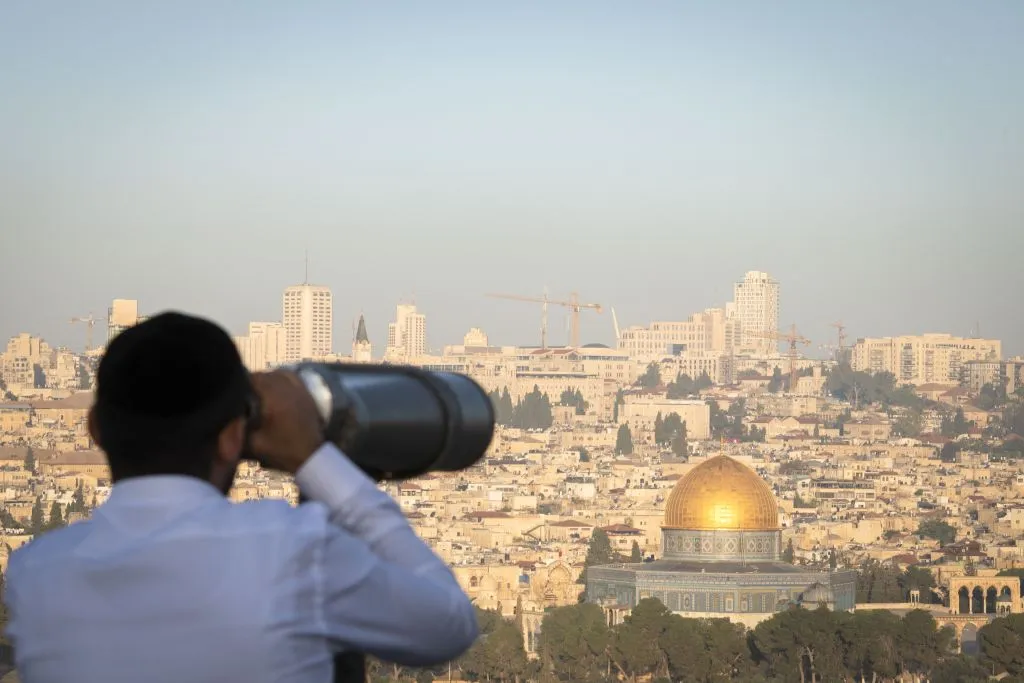
Jerusalem’s Temple Mount viewed from the Mount of Olives on Oct. 20, 2019. Photo by TPS
Prosecutors allege that Jamjum became radicalized and attended jihad classes at a mosque in eastern Jerusalem where participants were exposed to “messages encouraging suicide attacks and the murder of Jews.”
The indictment describes two alleged attack plots. In the first, Jamjum allegedly helped another individual manufacture an explosive device, sharing information about explosives and accompanying him to Ramallah to purchase chemical materials.
Separately, he allegedly developed a plan to carry out a suicide bombing at Al-Aqsa Mosque, targeting Jews visiting the Temple Mount. To prepare, he reportedly downloaded instructional material on making explosives and poison and practiced martial arts, which prosecutors say he intended to use to facilitate his escape and confront anyone trying to stop him.
Jamjum was arrested on October 13.
The Temple Mount, where the First and Second Jewish Temples were built, is the holiest site in Judaism.
Rabbis are increasingly divided over Jews ascending the Temple Mount. For centuries, the rabbinic consensus was that Jewish laws of ritual purity still apply to the site, restricting Jews from visiting. But in recent years, a growing number of rabbis have argued that ritual purity laws do not apply to all sections of the holy site and encourage visits to permitted areas to maintain Jewish connections to the Temple Mount.
The delicate status quo governing the Temple Mount goes back to 1967, when Israel liberated Jerusalem’s Old City from Jordan during the Six-Day War. Then-defense minister Moshe Dayan agreed to let the Islamic Waqf, a Muslim trusteeship, continue managing the holy site’s day-to-day affairs, while Israel would maintain overall sovereignty and be responsible for security. The Waqf is overseen by the Jordanian monarchy.
According to the status quo, while non-Muslims are allowed to visit the Temple Mount, they are not permitted to pray there.