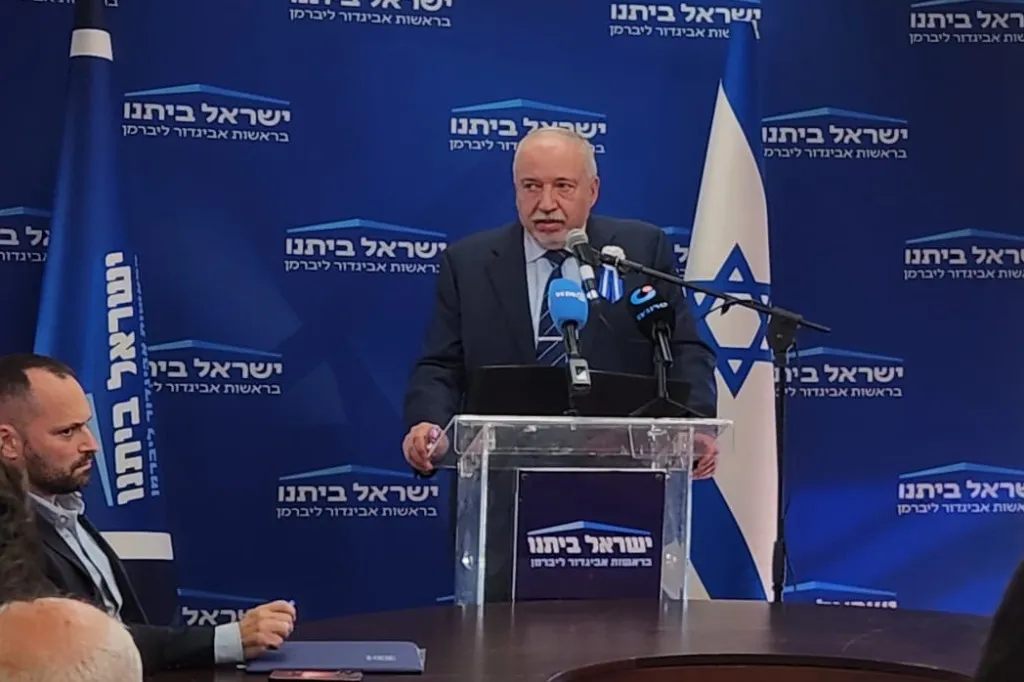
Jerusalem, 10 November, 2026 (TPS-IL) — Gadi Eisenkot pledged to work toward forming a national emergency government as quickly as possible, as opposition leaders outlined their competing approaches to replacing Prime Minister Benjamin Netanyahu ahead of the new Knesset’s swearing-in Tuesday.
“We have a deep commitment to our common future in Israel,” Eisenkot said at his faction meeting. “I am committed to establishing a national emergency government as soon as possible. We will do everything to be worthy of the heavy price and of the citizens of Israel who elected us.”
Democratic Party leader Yair Golan called on his partners in the Change bloc to move quickly to form a government, arguing that the country could not afford further delays.
“We have a country to save,” Golan said. “Every additional day that Netanyahu and his partners make destructive decisions about Israel’s security, economy, infrastructure and citizens is a day of increasing damage.”
Golan urged the bloc not to rule out cooperation with Arab parties, including the Joint List. “Don’t disqualify the Arab parties, and don’t disqualify the Arab public,” he said, arguing that Arab representatives should be eligible to serve in government. He also pledged that the first major decision of a new government would be to establish a state commission of inquiry into the Oct. 7, 2023, Hamas massacre.
Yisrael Beiteinu leader Avigdor Liberman reiterated his opposition to Netanyahu remaining in power but ruled out forming a minority government dependent on Arab-party support. He warned that such an arrangement would only bring Netanyahu back to power.
“Any minority government will bring him back very quickly for another four years,” Liberman said. “Anyone who talks about a minority government means bringing Netanyahu to another full term.”
Liberman said his party was prepared to compromise on military conscription legislation, moving away from its original demand for universal enlistment toward a bill that could withstand judicial review. He also cited legislation limiting the prime minister to two terms and reversing laws associated with the government’s judicial overhaul as priorities.
Religious Zionism leader Bezalel Smotrich, meanwhile, attacked the prospect of Arab parties supporting the appointment of Matan Kahana as Knesset speaker. He urged Kahana to reject the position if it depended on their votes.
“To be appointed Knesset Speaker by the votes of Israel’s enemies is not legitimate,” Smotrich said. He also warned Orthodox parties against cooperating with the opposition, calling the offer a “honey trap” and saying they would be discarded once Netanyahu was removed from power.
Kahana a former government minister, has been designated as Knesset speaker, while incoming lawmaker Roi Folkman will head the Arrangements Committee, which oversees the parliament’s organization and committee appointments. Both are members of Yashar! Liberman, a former defense minister, will chair the Foreign Affairs and Defense Committee, and Liran Avishar Ben-Horin of Beyachad will lead the Finance Committee.
The Arrangements Committee will finalize the composition of parliamentary committees this week, with the full Knesset scheduled to vote on the appointments Wednesday.
Eisenkot has 28 days from receiving the president’s mandate to present his government to the Knesset for a vote of confidence. The deadline for the initial period is Dec. 6, but the president customarily grants a 14-day extension, moving Eisenkot’s final deadline to Dec. 20.
If Eisenkot fails, Herzog is expected to nominate Netanyahu as a second candidate by Dec. 23, with a deadline of Jan. 20. If that attempt also fails, at least 61 MKs can recommend a third candidate by Feb. 10, who would have until Feb. 26 to form a government. Otherwise, the Knesset automatically dissolves, triggering an election on May 27.