


By Pesach Benson and Omer Novoselsky • September 24, 2026
Jerusalem, 24 September, 2026 (TPS-IL) — The battlefield may not be the only place where soldiers’ psychological resilience is tested. A new study of Israeli reserve soldiers suggests that close relationships and a sense of connection to their political worldview may also shape how they cope with combat-related trauma.
“We often think of trauma solely as a product of what happens on the battlefield,” Dr. Uri Lifshin of the Hebrew University of Jerusalem and the Israel Center for Addiction and Mental Health told The Press Service of Israel. “But our findings show that when soldiers feel insecure or alienated by the social and political realities around them, they become significantly more vulnerable to severe psychological distress.”
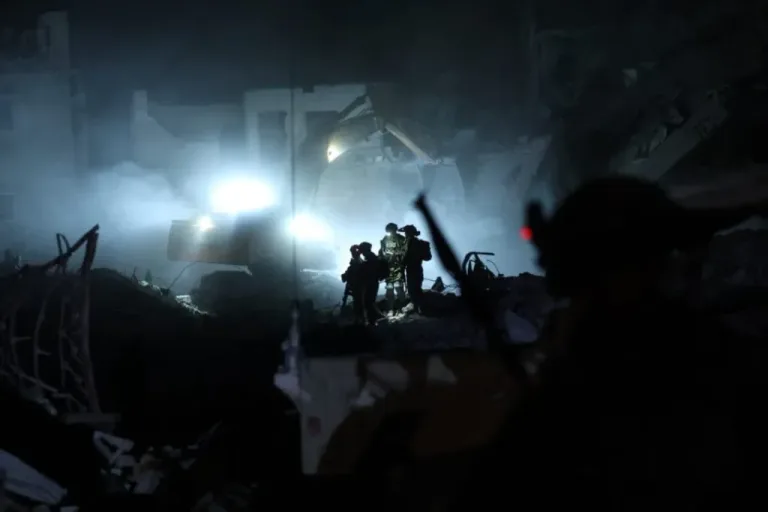
The study, published in the peer-reviewed journal Anxiety, Stress & Coping, examined 357 male reserve soldiers who served during the early months of the war in Gaza. Researchers found that greater exposure to life-threatening combat situations was associated with higher levels of post-traumatic stress (PTS) symptoms, depression and problematic addictive behaviors. These associations were stronger among soldiers with high levels of attachment anxiety and among those who had voted for opposition parties in previous elections.
The researchers stressed that the findings do not mean that a particular political affiliation causes trauma.
“Political view on its own was not related to psychological problems and addiction,” Lifshin told TPS-IL. “The association emerged only when it was paired with exposure to combat-related threats and attachment anxiety.” Attachment anxiety refers to persistent uncertainty about whether a person is valued, loved and supported by people close to them. According to the researchers, people with greater attachment security May Have a stronger psychological buffer against fears surrounding death and other existential threats.
The study is based on what researchers call “anxiety-buffer disruption theory.” In simple terms, the theory holds that people rely on relationships, self-esteem and cultural worldviews to manage awareness of mortality. When those sources of security are weakened, traumatic experiences may become more difficult to process.
Politics and Trauma
The political finding requires particular caution. Researchers found stronger associations between combat exposure, attachment anxiety and psychological distress among soldiers who had voted for left-wing opposition parties in previous elections. The researchers suggest that, for some soldiers, the war and the surrounding political reality may have threatened their sense that their political worldview provides meaning, security and a connection to something larger than themselves.
However, Lifshin stressed that the finding should not be interpreted as evidence that being left-wing makes soldiers more vulnerable.
“We do not think that these findings have to do with left-wing political affiliation per se, but with the position of threatened political worldviews engendered by the war and the political reality in which the political right wing is in power in Israel,” he told TPS-IL.
He added that if the political left were in power, similar associations might potentially be observed among right-wing voters. He also cautioned that the study was cross-sectional, meaning it can identify associations but cannot establish that one factor caused another.
The study also examined potentially harmful coping behaviors associated with psychological distress. Researchers found indirect associations involving problematic alcohol and cannabis use, gambling, pornography use and gaming, with PTS symptoms playing an important role in these relationships.
Lifshin said such behaviors may represent attempts to escape or numb distress, but emphasized that more research is needed Before the findings can be translated into specific treatments.
The study did not directly measure political disillusionment. Instead, researchers used participants’ votes in previous elections as an indicator of political alignment. Lifshin said his team is now conducting research specifically examining feelings of political loss and disillusionment.
The findings may eventually inform efforts to prepare soldiers for combat and prevent or treat psychological problems that develop afterward. But Lifshin cautioned against immediately using attachment anxiety or political dissatisfaction as clinical screening tools.
“Future research is needed to better measure political loss or misalignment as a predictive variable of mental health, beyond specific affiliations,” he told TPS-IL.
The researchers say the underlying psychological mechanisms may extend beyond Israel, although they stress that further research is needed.
“We believe that the mechanisms involved in these processes are more or less universal,” Lifshin said. “But Israel does offer unique conditions, where our wars and political choices may have existential consequences.”