


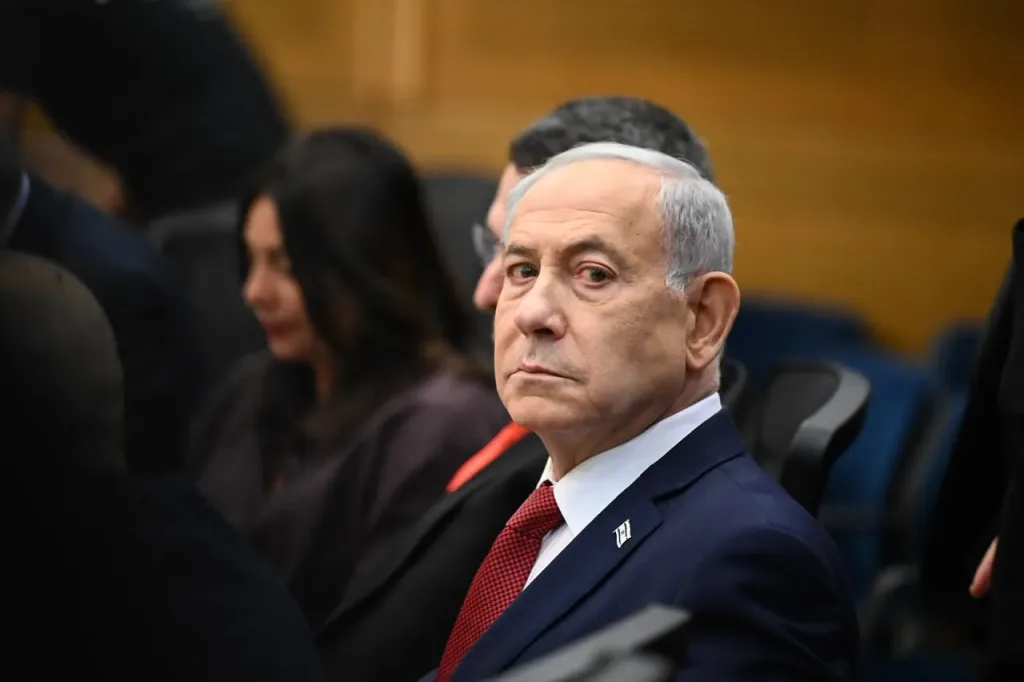
Jerusalem, 29 November, 2026 (TPS-IL) — A potential deal to end Prime Minister Benjamin Netanyahu’s corruption trial moved a step closer on Sunday, as both the defense and prosecution agreed to mediation at President Isaac Herzog’s residence. The Jerusalem District Court also approved a one-week suspension of hearings to give prosecutors time to reassess the case.
Netanyahu’s lawyers had previously declined Herzog’s invitation to negotiate, but announced Sunday that they would now participate. The breakthrough follows last week’s unusual intervention by the three judges overseeing the trial, who questioned the strength of parts of the prosecution’s case and urged consideration of an agreement in one of the three cases.
“In light of the judges’ words, there is no doubt that the trial should be concluded as soon as possible, and therefore we will attend a meeting at the President’s residence,” attorneys Amit Hadad, Israel Wollnerman and Noa Milstein said.
The judges’ comments prompted the prosecution to seek a temporary halt to proceedings. Deputy State Attorney Yonatan Tadmor told the court that prosecutors needed time to examine the remarks and establish their position before continuing with the trial. The judges approved a seven-day recess following the testimony of former Attorney General Avichai Mandelblit, whose cross-examination was scheduled to begin Tuesday.
Attorney General Gali Baharav-Miara and State Attorney Amit Isman said the prosecution was also willing to negotiate, but wanted to complete its review of the judges’ comments first.
Herzog renewed his appeal for a negotiated resolution earlier Sunday, saying the court’s observations warranted substantive discussions between the sides.
“Therefore, the president proposes holding substantive and in-depth discussions, with an open heart and a willing mind, in order to reach agreements,” his office said.
On Wednesday, the Jerusalem District Court judges presiding over Netanyahu’s corruption trial urged the prosecution to reconsider key charges in two of the three cases against him, warning that the prospects of conviction are low and recommending that proceedings in the third case be brought to a conclusion.
Case 4000, also known as the “Bezeq affair,” centers on allegations that Netanyahu advanced regulatory benefits for telecommunications company Bezeq in exchange for favorable coverage of his family on the Walla news website. The judges questioned whether the evidence sufficiently establishes that regulatory benefits were granted as part of such an arrangement or that Netanyahu was aware of it. They said both the bribery and breach of trust charges faced significant evidentiary difficulties.
“The chances of conviction are low,” Judge Rivka Friedman-Feldman told Baharav-Miara, referring to the bribery and breach of trust charges in the Bezeq affair.
Case 2000 concerns alleged discussions between Netanyahu and Yedioth Ahronoth publisher Arnon Mozes about favorable coverage in exchange for weakening the rival newspaper Israel Hayom. Friedman-Feldman said there were doubts about whether Netanyahu’s actions, as described in the indictment, demonstrated that he received a personal benefit or constituted a criminal offense. She recommended that prosecutors refine their arguments.
Case 1000, also known as the “Gifts affair,” involves allegations that Netanyahu received expensive gifts from businessmen Arnon Milchan and James Packer. With most of the evidence already presented, the judge said, “It is possible to move toward a conclusion regarding this charge, and a procedural path must be found to achieve that.”
The judges recommended that the prosecution consider dropping the bribery charge in Case 4000, reconsidering the fraud and breach of trust charges in Case 2000, and finding a procedural way to conclude Case 1000.
Friedman-Feldman stressed that the judges were not issuing a ruling or delivering a judgment, but sharing their assessment of the evidence and the state of the proceedings following the conclusion of Netanyahu’s testimony.
Netanyahu denies all the charges.
No serving Israeli prime minister has previously been indicted on criminal charges. Former Prime Minister Ehud Olmert resigned in 2008 ahead of his own indictment on corruption charges. He was later convicted and served two-thirds of a 27-month prison sentence.