Jerusalem, 16 November, 2026 (TPS-IL) — The State Attorney’s Office petitioned the High Court of Justice on Monday against a ruling by the judges in Prime Minister Benjamin Netanyahu’s trial that limits how prosecutors may question former Attorney General Avichai Mandelblit.
The petition names Judges Rivka Friedman-Feldman, Moshe Bar-Am and Oded Shaham, who ruled that the prosecution must question Mandelblit in re-examination rather than cross-examination.
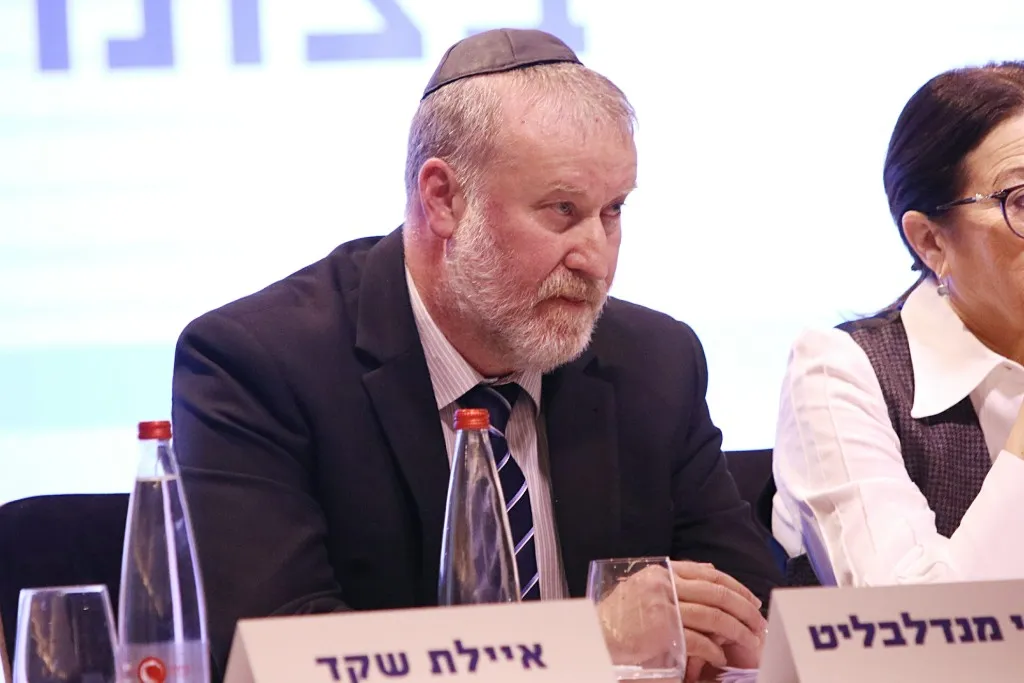
Mandelblit’s testimony dealt mainly with the Attorney General’s authorization of preliminary examinations and criminal investigations involving Netanyahu, and with his decision to file the indictment, as required by Section 17 of Basic Law: The Government.
Cross-examination is meant to undermine a witness’s credibility, expose inconsistencies, challenge the reliability of an account or advance the questioner’s theory of the case. Re-examination allows a witness to clarify, correct or supplement answers on issues that arose, or were left unclear, during cross-examination.
The judges ruled that the prosecution’s questioning would take the form of re-examination. It is subject to strict limits on the types of questions allowed and is generally brief and narrowly focused. Cross-examination permits more extensive questioning and deeper probing of issues raised in the initial examination.
The prosecution argued that questioning Mandelblit in re-examination, without a prior direct examination, “would prevent the court from establishing the full factual picture needed to reach a verdict.” Without direct examination, it said, discrepancies between his initial testimony and his answers under cross-examination could not be identified. Gaps in his recollection caused by the passage of time also could not be explored without the chance to present facts and documents.
The prosecution said the court had confined it to open-ended clarification questions on matters arising solely from re-examination. It allowed only one round of open-ended questions in direct examination and limited cross-examination to a narrow scope. This, the prosecution argued, denied it the opportunity to confront a defense witness with documents, testimony and competing theories, or to ask about matters relevant to the full factual picture that the defense’s questioning had not covered.
The prosecution noted that it was not seeking to re-examine witnesses it had previously been denied the opportunity to cross-examine. It said it had so far shown restraint by not appealing those rulings. However, it argued that the District Court had expanded its own discretionary authority, and that the practical effect was to restrict the prosecution’s ability to fulfill its role in establishing the truth.
It also warned that the ruling could limit its questioning of additional witnesses the defense might call, and that other courts might adopt similar rulings.
The petition was filed with the approval of Attorney General Gali Baharav-Miara, who is expected to appear in court next week, and State Attorney Amit Eisman.
Justice Yael Willner ordered that the petition be heard by a panel of justices as soon as possible but did not issue an interim injunction at this stage.
Although the court is listed as the first respondent, the judges are not expected to respond. The defendants’ attorneys are expected to defend the District Court’s decision.