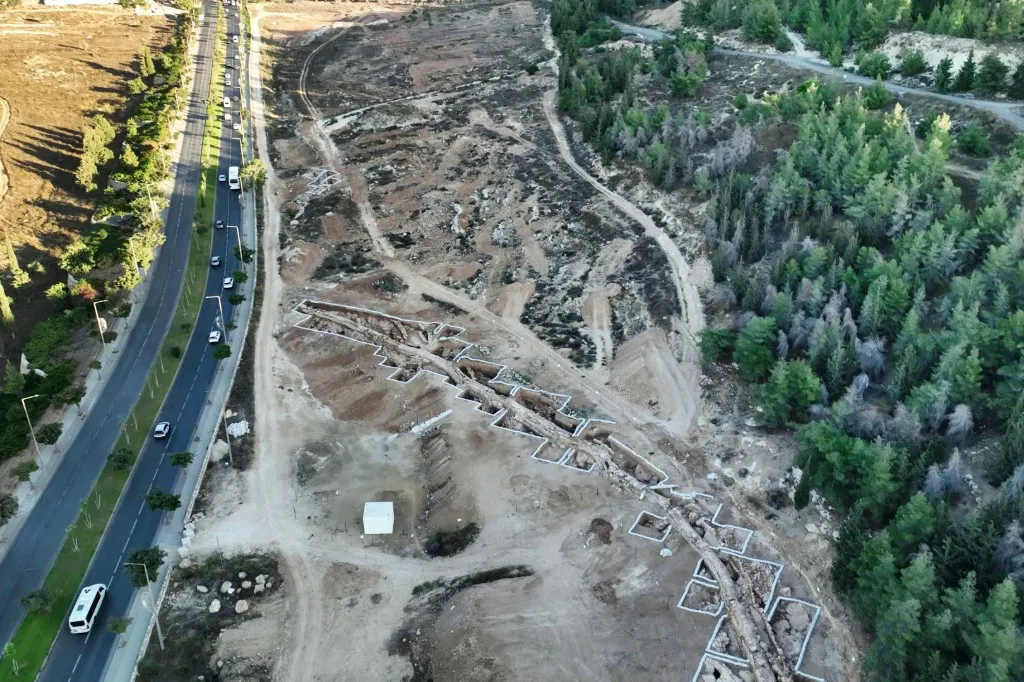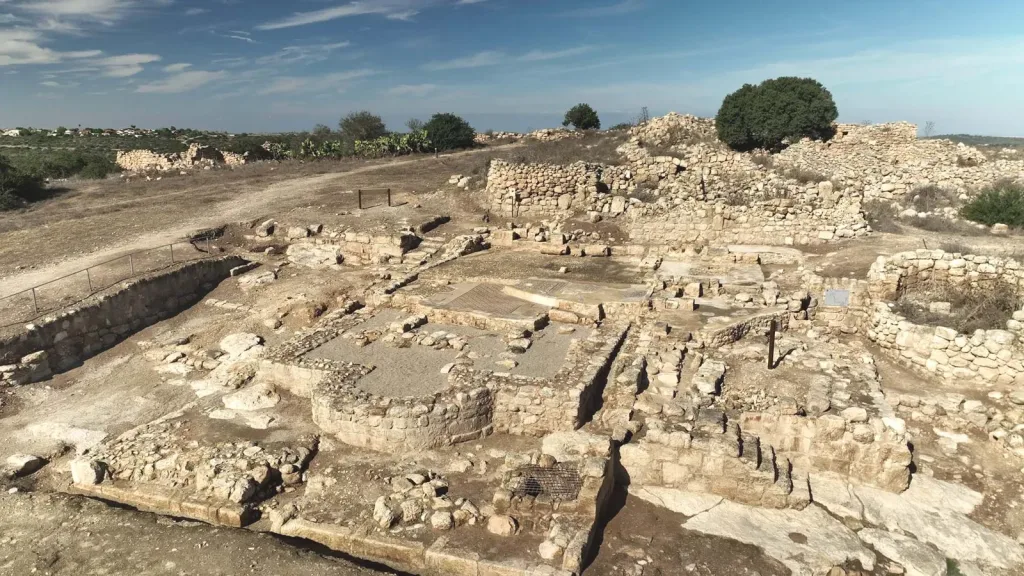
Jerusalem, 12 November, 2026 (TPS-IL) — Underground tunnels where Jewish rebels sheltered some 2,000 years ago, alongside a Byzantine church paved with colorful mosaics, opened to the public this past weekend at Horvat Burgin in Adullam–France Park.
The inauguration was a joint effort of KKL-JNF, the Israel Antiquities Authority and the Mateh Yehuda Regional Council, capping years of excavation, conservation and development.
Digs led by Dr. Amir Ganor, Alon Klein and Dr. Peter Gendelman uncovered a settlement that endured from the Second Temple period through Ottoman times. Researchers suggest the large Second Temple village may be Caphar Bish, a place named by the historian Flavius Josephus.
As tensions with Rome mounted in the Early Roman period, residents carved sprawling hiding networks into the bedrock. The settlement was destroyed during the Bar Kokhba Revolt. A pagan population later moved into the ruins, building anew above ground and cutting elaborate burial complexes beneath.
In the Byzantine era, a church and monastery rose on the site. Dovecotes and winepresses found in the vicinity show that residents made their living from pigeon breeding, farming and winemaking.
Ganor, who heads the Antiquities Authority’s Antiquities Theft Prevention Unit, described Horvat Burgin as the area’s largest ancient settlement. For years, he said, looters ravaged burial caves and tunnels and damaged standing structures. Enforcement operations, arrests of looting gangs, rescue excavations and the park’s opening finally stopped the destruction.
“The site was saved,” Ganor said, “and now it can be enjoyed by the public.”