



By Pesach Benson and Omer Novoselsky • September 10, 2026
Jerusalem, 10 September, 2026 (TPS-IL) — Israeli scientists have identified a molecular “switch” that helps determine whether a stressed cell survives or activates its self-destruct program, a discovery that could eventually contribute to treatments for cancer, heart disease and degenerative disorders.
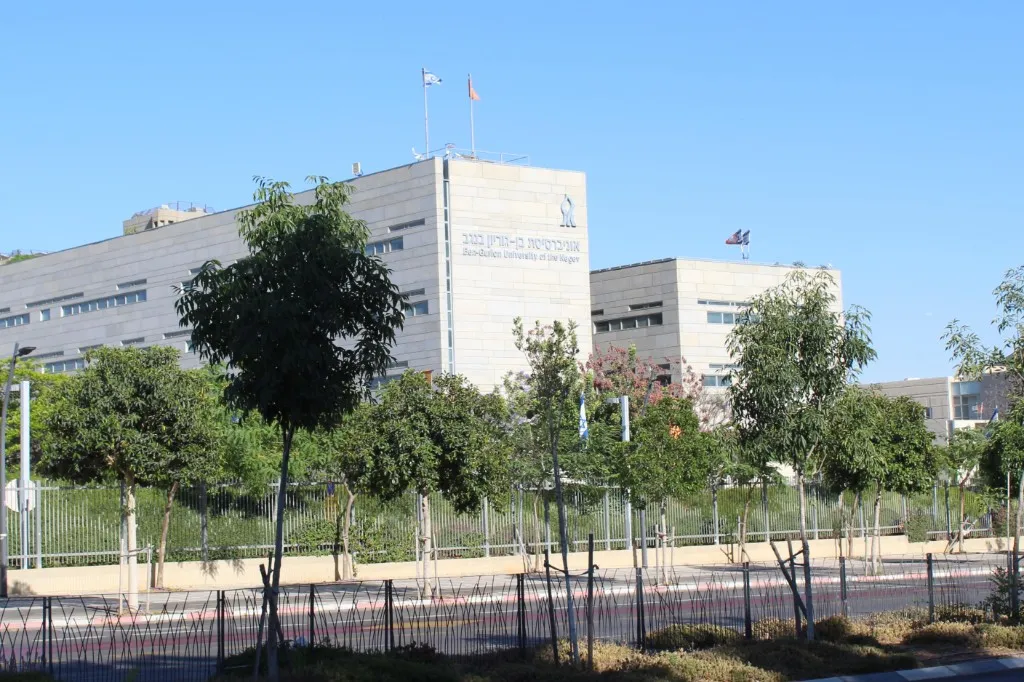
“We discovered that cells have a built-in decision-making system that determines whether they try to recover from stress or activate their self-destruct program,” Ben-Gurion University of the Negev researchers Laila Abu Madegam, Noa Gavriel and Raifu Tolulope Adebisi told The Press Service of Israel.
Scientists have long known that cells respond to stress by either adapting or undergoing programmed cell death, known as apoptosis. However, it has remained unclear how cells make that decision.
The study, led by Dr. Aid Agbaria of the university’s Department of Life Sciences, focused on two proteins, DNAJB12 and DNAJB14, and their role in the endoplasmic reticulum (ER), a structure inside cells responsible for producing and preparing proteins for use.
According to the researchers, the key is not simply the amount of damaged proteins inside a cell, but its internal chemical balance, known as its redox state.
Under moderate stress, DNAJB12 and DNAJB14 remain stable and help the cell respond by moving proteins out of the overloaded ER. This allows the cell to continue functioning and activates protective mechanisms.
When stress becomes severe or lasts too long, the cell’s redox balance changes. The researchers found that this alters the chemistry of DNAJB12 and DNAJB14, making them unstable. The cell then removes the proteins through its recycling system, called the proteasome.
“The loss of these proteins is not simply a consequence of stress. It is the key event that changes the cell’s behavior,” the researchers explained to TPS-IL.
The Cell’s Tipping Point
Once DNAJB12 and DNAJB14 disappear, a protein called BIK begins to accumulate. BIK helps activate two other proteins, BAX and BAK, which create openings in the ER membrane. This triggers a chain of signals that ultimately leads to programmed cell death.
The researchers said the mechanism appears to provide a safeguard against unnecessary cell death. Both the loss of DNAJB12 and DNAJB14 and severe, prolonged stress appear to be required to activate the death pathway.
The team also tested the mechanism in heart cells using a laboratory model that mimics a heart attack, in which cells are deprived of oxygen and then exposed to oxygen again. They observed the loss of DNAJB12 and a shift from a survival response to a cell-death response.
The findings could eventually have applications in two directions. In cancer, where abnormal cells can survive despite extreme stress, researchers hope that disrupting the pathway Could Make cancer cells more vulnerable to existing treatments. In heart and neurodegenerative diseases, the opposite approach could potentially help preserve healthy cells from premature death.
The researchers stressed that these potential medical applications remain speculative and require further study.
Their next steps include identifying additional proteins involved in the pathway, determining whether the ER releases signals that directly trigger cell death, and investigating whether disrupting the mechanism could make cancer cells more sensitive to chemotherapy.
“Our findings provide a new way of understanding how cells respond to stress—not only by switching genes on or off, but by reorganizing proteins within the cell,” the researchers said to TPS-IL.
The study was published in the peer-reviewed journal, Redox Biology.