


By Pesach Benson • September 6, 2026
Jerusalem, 6 September, 2026 (TPS-IL) — Children as young as second grade can construct explanations that identify the mechanisms linking causes and effects in biological phenomena, even when they do not have the facts entirely right, a new Israeli Study suggests.
The findings suggest that elementary science education could place greater emphasis on how children construct explanations, rather than judging their understanding solely by whether they arrive at the scientifically correct answer.
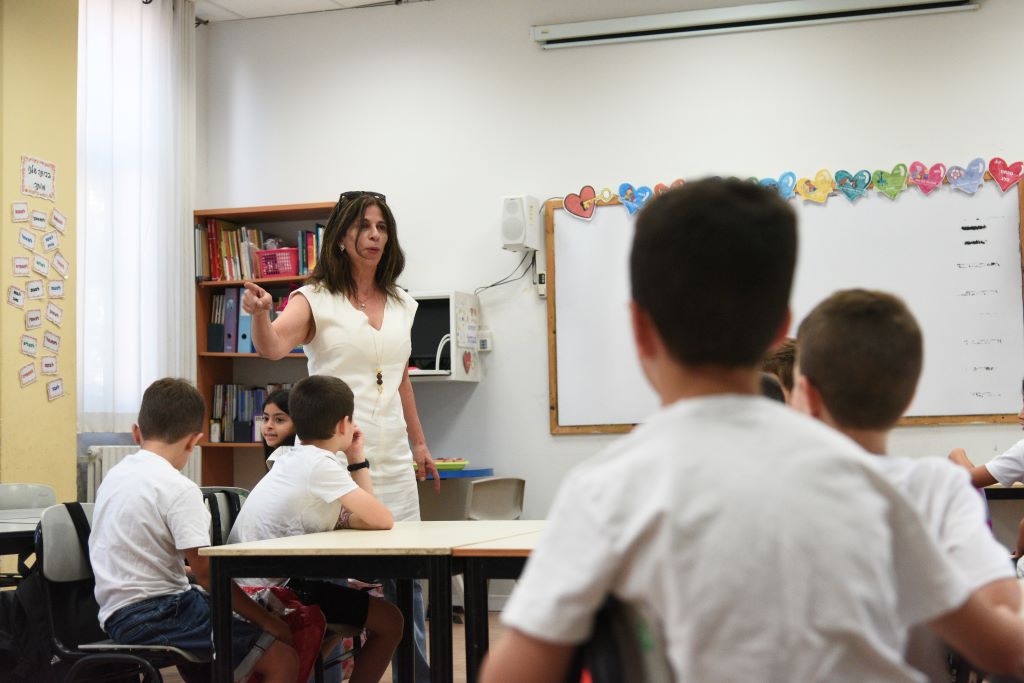
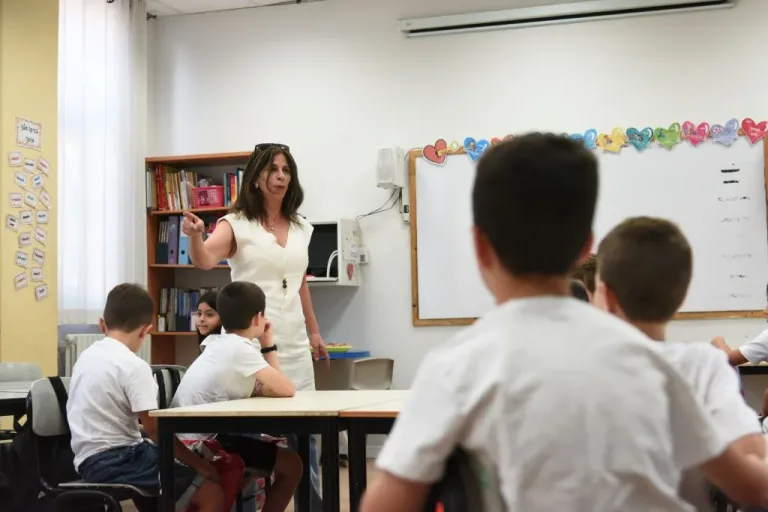
Children in a Jerusalem elementary school on Sept. 1, 2023. Photo by Yoav Dudkevitch/TPS
Researchers at the Weizmann Institute of Science found that 68% of 53 children in grades 2-6 produced “mechanistic” explanations — answers that describe the processes linking a cause to an effect. The findings suggest that children can engage in complex scientific reasoning earlier in childhood than some educational approaches may assume, even when they lack accurate biological knowledge.
“Most of the children in the study were able to produce mechanistic explanations, including children in second grade,” said Dr. Michal Haskel-Ittah, who led the research team. “They may not have always been accurate with the facts, but their thinking structure was correct.”
The findings, published in the peer-reviewed Journal of the Learning Sciences, could have implications for how children are taught and evaluated. Rather than treating an incorrect answer simply as a failure, educators could use a logically structured answer as a starting point for teaching the correct facts.
The researchers interviewed children in grades 2-6 in two stages. First, they asked the children to explain biological phenomena. They then asked them to evaluate different explanations of other phenomena.
The researchers distinguished mechanistic explanations from circular or teleological explanations. A mechanistic explanation describes how a phenomenon occurs by identifying the processes connecting cause and effect. A teleological explanation, by contrast, explains a phenomenon by referring to a supposed purpose or goal without explaining how that goal is achieved.
For example, a child might say that a plant grows toward light “in order to survive.” A mechanistic explanation would instead describe how the plant detects light and activates processes that direct its growth.
The children frequently preferred mechanistic explanations. According to the study, they selected mechanistic explanations 66% of the time when given a choice.
Beyond the Right Answer
The children based their judgments largely on two criteria: accuracy and explanatory power. They considered whether an explanation fit what they already knew, but they also recognized when an answer failed to explain how something happened.
One child rejected an explanation because “It doesn’t say how – it just says what happens.”
The researchers said this distinction is important because educational practices can place greater emphasis on reaching the correct answer than on demonstrating sound reasoning.
“Traditionally, we reward children for correct answers,” Haskel-Ittah said. “But we rarely give them feedback on the structure of their explanation—whether it really explains how something happens.”
The study also found that the wording of questions could influence children’s reasoning. Asking “how” rather than “why” encouraged them to focus on underlying mechanisms. When children were prompted to reconsider an answer by asking, “Yes, but how does it happen?”, many developed more complete mechanistic explanations.
“If we praise children only when they get the right answer,” Haskel-Ittah said, “they will simply learn to memorize. But if we also emphasize how they arrived at the answer – even when it is not accurate – we will convey to them that the way they think is also important.”
The researchers argue that the implications extend beyond science education, saying that the ability to assess explanations and distinguish between an answer that merely states what happens and one that explains how it happens can be valuable more broadly. Haskel-Ittah said the goal is “not only to raise the future generation of scientists – but to educate them for good citizenship.”
“At the end of the day, we don’t just need thinking scientists, we need thinking citizens,” she said.