


By David Israel • September 25, 2026
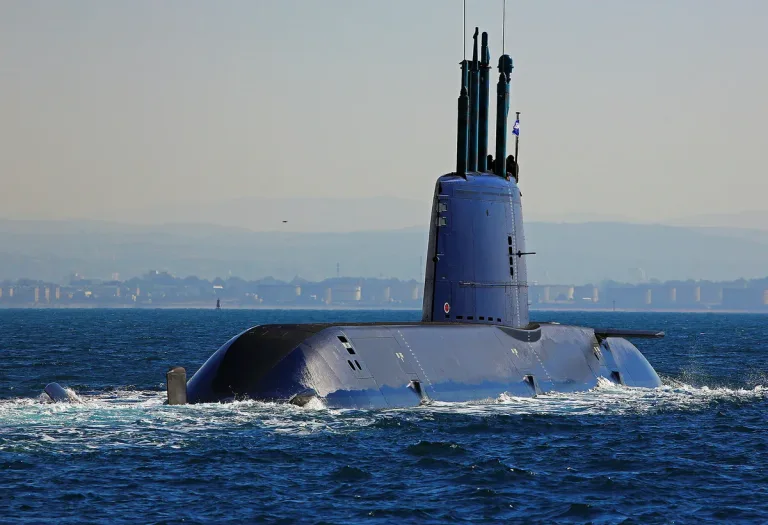
Jerusalem, 25 September, 2026 (TPS-IL) — INS Drakon glided into Haifa port on Wednesday night after a month-long, roughly 4,000-nautical-mile journey from Germany, becoming the Navy’s sixth submarine.
The submarine spent more than 12 years under construction at ThyssenKrupp Marine Systems in Kiel, followed by months of sea trials before setting out for Israel. It traveled across the Atlantic, through the Strait of Gibraltar and into the Mediterranean before reaching its new home.
But while Drakon represents the latest generation of Israeli submarine technology, the men operating the Navy’s submarines can be remarkably young. “Israeli submariners are among the youngest in the world,” Uri, a 20-year-old lieutenant, told The Press Service of Israel. “You can enlist at 18, and within a little more than a year you can be operating complex systems, become a submariner and take on significant responsibility.”
That combination of advanced technology and early responsibility is at the heart of submarine service in the Israeli Navy.
Much about Drakon, including its stealth technology, is closely guarded.
At more than 70 meters long, Drakon is roughly 30% larger than earlier Dolphin-class submarines, with less than a fifth of its full size visible above the waterline. Its defining feature is an air-independent propulsion (AIP) system that uses hydrogen and oxygen to generate power and recharge batteries without surfacing or drawing outside air, allowing the submarine to remain submerged for extended periods. It is the third submarine of the navy’s Dolphin AIP class.
Yet the technology is only part of what makes a submarine capable of operating beneath the sea. The vessels also depend on the officers and crews responsible for navigating, maintaining and operating these complex systems.
Uri recently graduated from Naval Officers Course 153 and reported for duty aboard INS Rahav, a German-built Dolphin 2-class submarine delivered to Haifa in January 2016.
From Moshav to Submarine
Uri never imagined himself in the Navy.
“I didn’t grow up near the sea, and I never really thought about it,” he said. Raised inland on a moshav in the Gezer Regional Council of Central Israel, he told TPS-IL. “I didn’t have any particular connection to the Navy.”
His path began almost by accident, when he took the military’s initial special-forces screening day and was invited to the Naval Officers Course selection process.
“At first, I was mostly confused,” he recalled. “I went to the selection assessment, passed it, and was accepted.”
“As I went through the process, I realized how different and special the role is. It involves combat in a complex and very different environment, together with an intellectual side that requires a lot of professional knowledge and the ability to deal with complicated systems,” he said.
For Uri, the physical demands were only part of the challenge. He found the mental demands of submarine service more difficult, particularly the uncertainty that comes with operating at sea and being sent on unpredictable missions.
“Ultimately, the mental aspect is the most difficult,” he said. “Physically, you have to be able to handle the sea, and that isn’t easy. But mentally, you have to deal with constant transitions and uncertainty. Things are always changing, and you never know exactly where you are going to be sent.”
That uncertainty also affects life away from the submarine, particularly for young sailors whose partners, friends and families are waiting for them at home.
“That’s very challenging, especially when you have a partner, friends and family waiting for you at home,” he said.
The demands of submarine service also shape the way officers lead and work with their crews. Uri said that the training and responsibility expected of submariners leave little room for distinctions based solely on seniority.
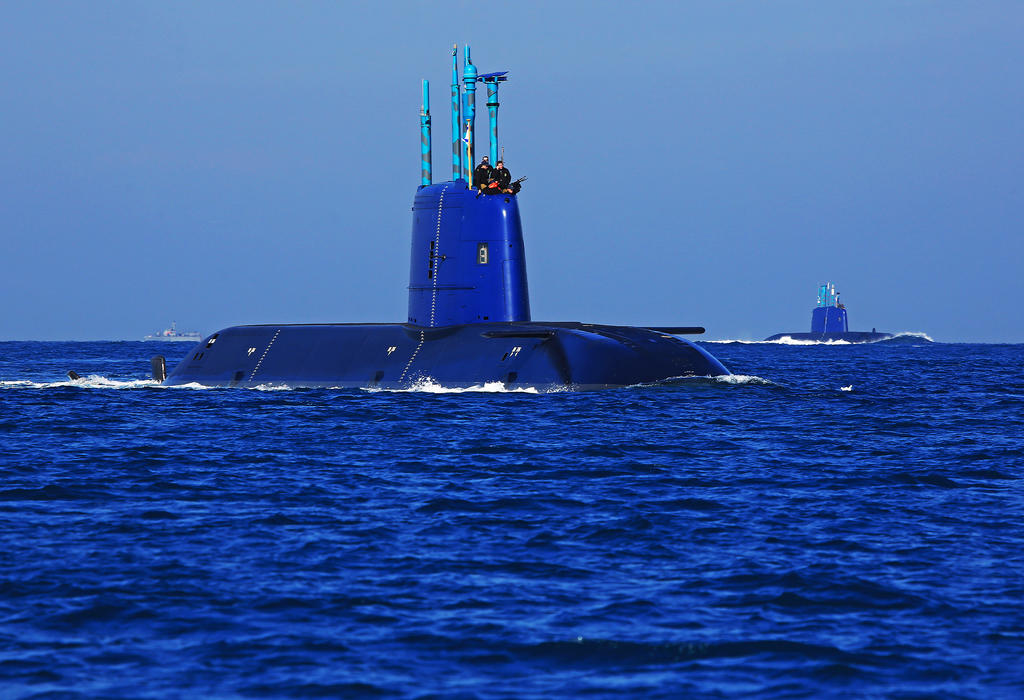
The fifth submarine of Israeli Navy – Rahav – arrives in Haifa on Jan. 13, 2016. Photo by Yissachar Ruas/TPS
“I’m a naval officer, but a submariner goes through an extremely demanding and difficult training track. Once he joins, seniority doesn’t matter in the same way. He is expected to meet the same standards as an experienced fighter, and he is given significant responsibility and independence.”
The confined environment creates an unusual level of dependence among crew members, Uri said.
“You can’t fake anything on a submarine,” he said. “You’re underwater, and command becomes very human. You have to rely on one another.”
From Dolphin to Dakar
Uri is part of a submarine program that reflects decades of close Israeli involvement with Germany. An Israeli project directorate follows the construction of each submarine from planning through sea trials. Naval officers and engineers relocate to Germany with their families for years at a time, later joined by flotilla crews for sea trials before each vessel is delivered.
The same directorate is now overseeing the next generation of Israeli submarines, the Dakar class, which is already under construction. With Drakon‘s arrival, the Navy has completed the second generation of German-built Israeli submarines, extending a defense partnership between Israel and Germany that has spanned decades.
The submarines also carry names with long histories. Rahav, for example, takes its name from Rahav, a mythical sea creature mentioned in the Bible as a symbol of the primordial forces of chaos.
Special Israeli-made systems still need to be installed before the Drakon begins its special operations.