


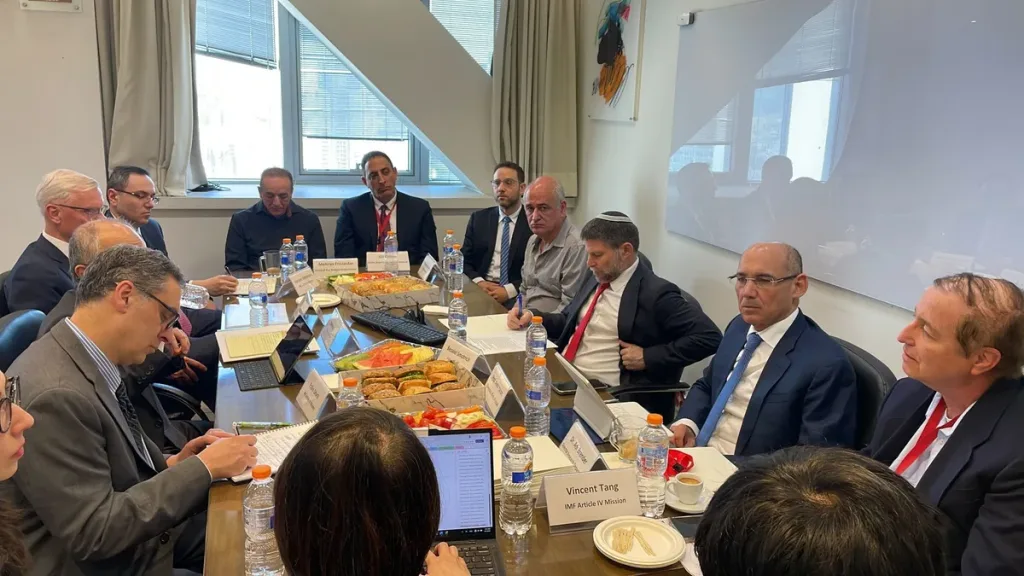
IMF mission ends Israel economic talks
The IMF's annual mission to Israel concludes economic talks, issuing a preliminary report noting the economy's resilience post-ceasefire but also war's impact.
The IMF's annual mission to Israel concludes economic talks, issuing a preliminary report noting the economy's resilience post-ceasefire but also war's impact.

Israel revives "Hovel Tekumah" doctor retention grants, offering up to NIS 600,000 to recruit specialists to the Gaza Envelope and strengthen vital healthcare.

Israel's government adopts Google Workspace for its digital work environment, integrating AI tools and advancing Project Nimbus cloud strategy.

Israel's Finance Minister Bezalel Smotrich approved a 70% hike in duty-free cheese imports, expanding quotas from 11,500 to 19,500 tons to fight high living.
Israel's government approves a new southern airport in Tze'elim, accelerating its development to address passenger growth and prevent a future aviation crisis.
Israel offers up to NIS 600,000 in recruitment grants for specialist doctors in the Gaza Strip, part of a NIS 10 million plan to boost healthcare accessibility.
Israel launches Government Innovation Space, a first-of-its-kind platform for experimentation and improving core government processes, driven by the PM's.
Israel's banking competition reform, approved by the Ministerial Committee for Legislation, aims to lower interest rates and improve credit for SMEs and.
Israel's Finance Minister blocked a steep 34%-105% aluminum tax on Chinese imports, averting a 23,000-ton shortage for the construction and housing market.
Israel's Ministry of Finance raised $6 billion in dollar bonds at improved spreads of 90-125 bps, a 34% tightening from 2024, demonstrating strong international.